A blog about the activities of the Museum Career Internship Program, a partnership between The American Folk Art Museum and LaGuardia Community College. Support for this program is provided by Richard and Laura Parsons, the Schaffner Family Foundation, Jane and Gerald Katcher, Donald and Rachel Strauber, and the LaGuardia Community College Foundation.
Hi! My name is Nik Martinez (he/him) and I’m a second year Fine Arts student at LaGuardia Community College. I come from an immigrant Dominican family in the Bronx and have lived in New York City my entire life. I’m really interested in anime, fashion, live music and all the things that make New York a one of a kind place to live and grow. I’ve been drawing my whole life and don’t see myself stopping anytime soon. The only future I can imagine for myself is one surrounded by art, where I’m not only making it but I’m discussing it with likeminded artists every single day. In the future I see myself doing freelance work and hopefully landing a position working in a museum.
Ralph Fasanella (1914–1997), Subway Riders, New York, NY, 1950; oil on canvas, 28 x 60 inches, Gift of Ralph and Eva Fasanella, 1995.8.1
Subway Riders by Ralph Fasanella captures the diversity of the people who take the train every day. Each of them are sitting next to each other, not knowing anything about one another, having their own lives to worry about. When they get off the train they’ll go back to whatever they were doing before, but while they’re on the train, for that moment everyone is just doing the same thing: trusting the train to bring them to where they need to go. The painting’s style is simple and straightforward–it doesn’t need to be anything else to get its message and feeling across and that’s why I like it so much. The painting was made in 1950, and I think showing such diversity and a real reflection of what the world looked like during a time of so much injustice and hatred is really powerful.
Hi! I’m Jade (he/she) and I’m a second year Fine Arts student at LaGuardia Community College. Growing up, I thought I would go into science. I loved everything about science and tried to get into anything that was science-aligned. Although I was a science nerd, I loved going to museums. One day on a class field trip, we went to an art museum and it changed my whole perspective. I drew as a kid, but that trip made me want to draw for the rest of my life. In high school, I met one teacher who changed my point of view on everything I wanted to do. She became a positive role model and inspired me to become an art teacher. Now I’m at LaGuardia on the fast track to being an art teacher, since I also want to become a positive figure in student’s lives.
I first chose this painting because I found the style of the cats to be very unique but also very silly. I had to do a double-take because they don’t actually look like normal cats. The more I looked at this piece, the more I noticed the small details. The strokes of yellow and green that surround the red-dotted area complement each other. I interpreted the area where the mother cat and the kittens are enclosed within the green and white border as a metaphor for her taking care of and protecting her kittens. Hirschfield’s quirky style works in this painting’s favor because it really caught my eye in the sea of other pieces from the Museum’s collection.
Hi, my name is Aaron Vasquez (he/him). I am 20 years old and I was born and raised in Queens, New York. I am currently a Fine Arts major at LaGuardia Community College, and I plan on transferring to a 4 year college. My top pick is currently the Fashion Institute of Technology, and I would love to have the opportunity to study abroad in Brighton, England.
I like to draw and paint as well as sew my own clothes. I particularly like painting and drawing realistic portraits–the realistic elements and all of the small details stood out to me very early on within my art journey, and I can pinpoint my interest in realism as early as 13 years of age. When it comes to sewing, I’ve always had an interest in creating my own clothes and turning drawings into reality. I finally bought my first sewing machine when I turned 19.
Original artwork by Aaron Vasquez
I found out about the American Folk Art Museum internship program through past alumni and was interested immediately. It was always my goal while in college to be a part of an art based internship and I found this to be the perfect opportunity. My overall goal with this internship is to obtain a level of professionalism and to further envelop myself in a more varied spectrum of art to hopefully inspire and push my style. I am looking forward to becoming more involved within the art world and understanding how the inner workings of the world of art function.
This piece by Eugene Von Bruenchenhein stood out to me due to its variety of colors. At first, it reminded me of tie-dye. The vibrant reds and oranges contrast with the muddied greens–juxtaposed, they work really well together. The piece has an almost watercolor look even though it is made of oil paint. The artwork also has so many varying textures–the sharp lines mixed with the softer, circular brush strokes makes the work very interesting to look at.
My name is Maryhelen (she/her), and I’m a Business Administration major at LaGuardia Community College. I have always loved art, more to analyze it than to do it myself. My goal in being here is to expand my understanding of art, and use that understanding to market the creativity and passion of artists who are under-recognized.
This drawing by James Castle illustrates an eerie grey homestead, surrounded by tall dark trees that swallow the house into darkness from the sky. The contrast between the trees and house, with the cool ashy grays of the ground and sky sandwiching the illumination, portrays the house as a cautious yet inviting entity. The scenery creates a sort of stillness, as if looking into the mind of Castle, reliving this memory in the moment. From standing at the wooden fence, the barrier between the wooden house and endless trees and forests of Idaho, hearing the everlasting silence only to be disturbed by the crunching sounds of branches, or the melodic sounds of the chiming wind hitting the leaves. Within the silence, the whiff of the prevalent smell of ash, soot, smoke travels to the tongue, swallowing the scenery as if the scent is engulfing, or the house itself is. The memory leaves the viewer still with the eerie, yet comforting feeling you wish you could relive, rejoin, and return to.
My name is Maddi (she/her) and I am a student in the Associate of Photography program at LaGuardia Community College. I have an interest in historical photographic techniques and photography that speaks on the issues closest to me, namely queer and feminist ones. Originally from Kentucky, I moved to New York City just shy of 5 years ago, looking for a place to grow and expand my own artistic practice, that of studio photography. That desire to grow eventually brought me to LaGuardia Community College, and from there, to the American Folk Art Museum via the internship program.
Morton Bartlett (1909–1992), Boston, Massachusetts, Girl Curtseying, Chromogenic print mounted on museum board, printed from original Kodachrome slide, number 5/10, published by the Bartlett Project, LLC, Los Angeles, CA; c. 1955, printed 2006; Sheet: 28 1/4 x 20 ” (71.8 x 50.8 cm), Gift of Barry Sloane, 2019.18.13, Photo credit: Adam Reich
This particular image from the Museum’s collection strikes a chord with me in many ways. First, it calls to mind an “all-American” aesthetic which represents a way of being in America which is either quickly vanishing, or, more likely, never existed in the first place. Secondly, there is a sort of voyeuristic male-gaze to the presentation of the doll. The pose of the doll demonstrates the innocence and naivety that comes with youth, but is paired with an erotic undertone. Finally, there is this advertisement-like quality to the composition. All of these qualities come together to form a fascinating visual tension, not unlike a David Lynch movie, that keeps the viewer fixated.
A photographer and graphic designer, Morton Bartlett spent most of his spare time crafting and photographing lifelike carved plaster dolls, which he shared with close personal friends and acquaintances. In the photograph above, Bartlett crafted a plaster doll of a girl with caucasian skin, blond hair, and brown eyes in his standard ½ scale, wearing brightly colored dress and straw cowgirl hat, doing a curtsey. During his life, Bartlett took some 200 black and white photographs and 17 color slides of his dolls, 15 of which survived after his death. Speaking on his craft in the 25th Anniversary Report of Harvard’s 1932 graduating class, he said, “My hobby is sculpting in plaster. Its purpose is that of all proper hobbies – to let out urges that do not find expression in other channels.”
Hello there! I am Josiah Walker (he/him) and I attend LaGuardia Community College. I am a Fine Arts – Graphic Design major working toward my goal to work as a graphic designer. I have a strong passion for digital art and the traditional medium of paper and pencil. I grew up drawing, and my illustration background is what inspired me to follow a career in art. Growing up in New York, I observed that the city is always moving, no matter where you are. The simple act of drawing cartoons and thinking of characters to escape hectic city life feels amazing. As I explore new mediums to paint, draw, or draft something new, I feel that childlike joy of drawing all over again. I enjoy creating because once I have a spark of inspiration, I can’t let go of that urge until it’s complete.
Visiting the Andrew Edlin Gallery as part of the Museum Career Internship Program
My goals as an undergraduate are evolving, because I am still learning about opportunities I can participate in with my level of experience. For some, this might be a hindrance, but to me it just means there are more skills to acquire in order to clearly define my goals. I am happy to be able to make progress with my education while also being able to pursue life as a professional creative.
Louis Monza (1897–1984), The Comic Tragedy, 1943, New York, United States; oil on canvas, 54 × 72 inches; Gift of the artist; 1984.6.1
I chose this image because of its bold colors and cubist style. The painting reminded me of Pablo Picasso. This was my initial reason for selecting this piece, but what really interested me is the background of the artist. He led a relatively humble life and became a painter during his time as an immigrant in the United States. He also became very socially conscious. Monza criticized wars and the pollution of a world that, at the end of the day, affected the working class and not so much the bourgeois ruling class. He continues his criticism of war by dressing the soldiers as clowns, trampled by the same horses that they ride into battle. I believe he is symbolizing the aristocratic upper class leading these soldiers, knowingly leading them to their deaths.
My name is Tamara Diaz (she/her), and I am originally from Argentina. I first studied Business Administration in my country, but I have always felt a strong connection to the arts. When I moved to NYC as an international student, I found the chance to study Fine Arts at LaGuardia Community College, and without hesitation, I jumped into this beautiful artistic journey. I love spending time with family and friends, reading about history, and making art such as drawing, design, and collages.
As an intern at AFAM, I see art as a powerful tool that helps us learn from the past and shape the future. The arts have always played a role in shaping rights and achievements in different parts of our lives. That is why I am especially interested in how a museum builds meaningful connections with the community and how those connections can help us grow together as society.
Consuelo (Chelo) González Amézcua (1903–1975), In the World, ballpoint pen on paper, 28 x 22 inches, 1962, Del Rio, Texas, United States; Blanchard-Hill Collection, gift of M. Anne Hill and Edward V. Blanchard, Jr.; 1998.10.1
I identify with the AFAM collection through “In the World” by Consuelo González Amézcua because it evokes feelings of happiness, joy, and empowerment. If I were to create a story about this artwork, I would say:
Here she is.
Her walk shows resilience.
With every step, there is hesitation,
Because she doesn’t know what might happen to her.

She longs for freedom
She fights for freedom.
She fights for equality.

Her dress enhances her beautiful body,
Red, blue, black, and green,
Like wings at her feet,
Wings she will one day use to go wherever she wishes,
The day she feels free.

Behind her,
Intricate embroidered shapes appear,
Brow, purple, lilac,
Representing the obstacles and triumphs she has survived.

At her sides,
Lie the victories and the fall,
Those ones that have shaped the person she is now

And finally,
The precious white dove,
Symbol of freedom,
The freedom we all long to meet.
Hi! My name is Isabella Wood (she/they); I’m a sophomore at LaGuardia Community College majoring in Fine Arts. I’m a Texas native but reside in the heart of Queens. New York City is the place I always knew I’d end up in. Since I was a little girl, I had the classic dream to move to NYC and become an artist–and while it has not been a linear path at its core, I am still striving for that. My mother is an artist, so it’s been intrinsic to my life for as long as I can remember. Growing up my passion stemmed from material; the idea you could make anything with virtually anything allowed me to hold a wonder and aspiration towards being a creative. As I got older, I began to examine art through a wider scope–it was so organic in my life, what if it was organic to life itself? Things like the Fibonacci sequence and the Latin term “horror vacui” (meaning fear of empty space) drew me to humans and nature, interpersonal or worldly connections, unspoken but recurring across time and the globe.
My career goals now are to be a gallery curator, to work in community outreach making art more accessible, and to rethink ideals of what it means to be an “artist”. I plan to go on to a four-year university, get my master’s and possibly doctorate. The ethos of the American Folk Art Museum is what initially drew me in, what it means to be a self-taught artist, and the perspective you gain when pieces and people are recognized and put into context. I’m hoping for better clarity and guidance through the program of what it looks like to be in the art field, as well the inner workings of a museum. I’m excited to learn about people and their creations.
Matteo Radoslovich (1882–1972); Golf Ball on Rubber Ball, c. 1947–1982; paint on metal, wood and mixed media; 4 3/4 x 3 1/4 inches; Gift of Dorothea and Leo Rabkin; 1983.17.34
One of the three-dimensional works from the American Folk Art Museum’s collection that stood out to me was Golf Ball on Rubber Ball by Matteo Radoslovich. Radoslovich was from Croatia but immigrated to New Jersey in his early adult life, only creating after his retirement at the age of 65. What drew me to this piece was its simplicity that allows your mind to wander, a dirty golf ball teed on a worn badminton birdie atop a pale blue rubber ball, cracked akin to an old porcelain doll with a ring of seemingly strategically rusted scrap metal. It’s composed of metal and wood, almost unnoticeable. At first, I saw the stack of objects, but the longer you look the more ways you see: an old carousel, a feminine person, a joystick. The golf ball serves as head, light, or handle. The birdie a tent top, a blouse or silhouette, stabilizer. The scrap metal horses needing a paint job, containment, a seat, or a base.
Hello There! My name is Nicole Clynes (she/her). I originally come from Florida and moved to New York in my teens in hopes of pursuing my career in the arts. I grew up learning how to keep myself occupied by drawing, writing, learning music, and sewing. I was intrigued growing up by the craft of sewing that my grandmother passed down to both me and my mother. I felt the urge to further my passion with sewing and learn about different textiles and work on pattern making.
During my own creation process there are a lot of steps taken to perfectly plan the best piece I can. I love to sketch, and one of the best parts of the process is this first step which can be changed constantly until getting the design I love most. Then, sticking with that design, I will work endlessly to drape it perfectly and measure correctly. After that, it comes down to putting everything together piece by piece and completing the garment I’ve made. Throughout the whole process I am able to see what I can experiment with and test to see what works and what doesn’t. In a lot of ways it helps me stay focused and eager with my options.
Log Cabin Quilt, Barn Raising Variation, Mary Jane Smith and Mary Morrell Smith, 1861–1865; cotton, wool and silk; 74 x 81 inches; Gift of Mary D. Bromham, grandniece of Mary Jane Smith
When I first came across the American Folk Art Museum, the first thing that caught my eye were the beautiful handcrafted quilts. With every thread and every patch there is a sense of love within them and individuality that emerges from them. The specific quilt that brought this immense feeling was “Log Cabin Quilt, Barn Raising Variation” by Mary Jane Smith. I was really moved by its story. Mary Jane and her mother Mary Morell Smith worked on this quilt together. They had a strong bond, even though Mary Jane died before being able to use the quilt which originally was intended for a trousseau, otherwise known as a collection of items a bride takes with them after they are married. The thought put into this quilt makes it even more commendable, considering its duality and beautiful varying patterns. Both the quilt and the story helped open up a part of my own experience and reminded me of the importance of family bonds. It also taught me a bit about collaboration. I want to know even more about the process behind finding these beautiful pieces and learning about the artists and their backgrounds. Because of this I am excited to work for The American Folk Art Museum! I want to build my skills, understand the art world better, and deeply appreciate the wonderful cultural influences that many pieces in the museum exhibit.
My name is Nia Lland (she/her), and I am a Jamaican American born and raised in New York City. Some things I enjoy doing are traveling, cleaning, self care, spending time with family/friends and making a lot of art. Art has always played a huge role in my life since the age of seven. I’ve had many experiences with drawing and painting. During my four years at John Bowne High School, I began to expand, explore and grow my art skills. As a Visual Arts student I’ve taken classes such as studio drawing, painting, printmaking, graphics, and 2-D art. I also express my creativity through fashion. Currently, I am a Fine Arts major at LaGuardia Community College. My goal is to figure out what type of art career would most interest me, whether it’s illustration, graphics or fashion design.
Original artwork by Nia Lland
Being a part of the American Folk Art Museum internship program is helping me to gain experience and think of possible careers I can pursue as an artist. One of the things that I find fascinating is taking the time to examine an art piece and gathering important information. I think it’s important for me as an individual to learn about the history of art, gain inspiration, explore and find artwork that I can relate to.
Thornton Dial, Sr. People Love to Model, 1990. Oil, braided rope carpet, shag carpet, industrial sealing compound on canvas, mounted on wood, 60 × 96″, Bessemer, Alabama, Gift of William S. Arnett in memory of Robert Bishop
One of the pieces that stood out to me from the American Folk Art Museum’s collection is “People Love To Model” by Thornton Dial, Sr. This artist is from the state of Alabama. Most of his artwork consists of sculptures and painting. I’ve chosen this piece because I love how the artist incorporated bright colors to give a vibrant look. I am also impressed by his use of white lines to create highlights around the faces and features. In this art piece, you can see a tiger on the left side and three different faces. There are also three standing figures doing their own poses. One of the things that stood out to me in this painting is the standing figure in the middle. I like how the color of the clothing is different from the other two that are gold, it creates a unique pattern. The white marks add value which gives a shiny look to the clothing.
When I first was interviewed to be an intern for the American Folk Art Museum, I was nervous to introduce myself. First impressions and identity is a tricky situation to navigate, but what captures me best is simply my name: Kai Wong. Kai can mean multiple things depending on the culture. In Mandarin, Kai means triumph and victory, which really says a lot about my goals and the ambitions. Queens, NYC, with its vibrant streets and diverse culture, is my canvas for inspiration. The constant pulse of the neighborhood—colors, sounds, and stories—ignites my passion for creating art. Sight and touch are senses that really solidify my love for my most common mediums. Digital, acrylic paint, and highlighters are mediums that I use to feed my sight. The colors are vibrant, saturated, and intense. Soft pastels, oil pastels, graphite, charcoal, and color pencils are mediums that I enjoy because of the texture. As an extroverted person, I really enjoy drawing people and capturing the unique poses and expressions a lot of my muses have. Living in a big city you come across many different types of people with stories of their own, including myself. I really enjoy storytelling through writing, art, and tabletop games. I love creating things not with just my hands, but with my words as well.
During my spring semester in 2024, I went on a field trip to the National Museum of the American Indian. I was extremely excited to see how they presented an underrepresented group of people. Once there, I was critical about the use of space, how the pieces were presented, and many other issues that I had with the exhibit. I asked why the pieces were presented in this manner. How can I improve this? What does an exhibition curator do? Then my professors informed me about the opportunity to be an intern for a museum for self taught artists. It was almost like a match made in heaven. The perfect opportunity to really have the answer to all of my questions and more. Being new to the art world, since I have only recently changed my major from Psychology to Design, I felt like I was wandering aimlessly. With this internship I hope to explore the different career paths as well as answer all my questions about what goes behind museums.
Christine Sefolosha; Long Sleep; 1997; Tar and pencil on paper; 37 1/2 x 56 in; 2022.6.61; American Folk Art Museum
There is a piece in the AFAM collection called “Long Sleep” by Christine Sefolosha. Her work of art is a telling of her experiences as both a true dreamer and her journey in South Africa. Because of high political tension there, Sefolosha spent her time in a protected environment at the age of 20. That did not stop her from drawing, especially her favorite subjects: animals. She often uses dirt and tar in her paintings which I believe is to represent the connections to nature. The double meaning of the title was the hook that grabbed me. In “Long Sleep” she used tar to depict an animal curled up in a “long sleep”. In stressful situations our dreams are often a reflection of our reality. When one feels a constant need to escape, they long to finally decide to stop and rest. I chose this piece because I first loved the calligraphy-like style it had. The splatters make it look like a top down perspective of an animal–perhaps an antelope– “resting” on grass. While researching about “Long Sleep”, I became curious if there was any particular meaning of the antelope which is a native species of South Africa. I discovered it means freedom. The meaning could be homage to the people in South Africa suffering in the political situation occurring. Learning the history of an artist and how that reflects in their work is what gets me heated about an art piece. One of the biggest reasons why I love folk art is because there’s just so much rich history waiting to be discovered. In this piece I found treasure.
Hi there! My name is Luna (she/her) and I am a proud Mexican-American residing in beautiful Astoria, Queens NY! Along with being a New York City resident my whole life, my father helped influence my love for the arts. I learned a lot from Mexican folk art as well as basic graphics in the NYC punk and alt youth scenes. I’m currently a Fine Arts major with goals of becoming a creative director (I love concept art). Throughout my time in high school I developed a huge interest in game and character design, hence the goal of becoming creative director in areas I enjoy! I love to see the progress of concept art from big labels and single developer indie studios. Ever since then, I’ve been practicing and further improving my skills as an artist does. Interning at a museum with a bunch of folk art is great when it comes to looking for inspirations.
My interest in that specific field led me to apply for the American Folk Art Museum’s internship program! I remember reading somewhere that the key to becoming a great artist is being able to sell. When I saw how this internship would be a great step in the right direction in terms of networking and building relationships with colleagues, I just had to shoot my shot. This internship is a great way to gain confidence in my public speaking skills too. I love how it makes me feel like I’m improving in a professional way.
Photographer’s Backdrop, 1989; Villa de Guadalupe, Mexico, 7′ x 9′ x 2″
Besides the incredible work ethic we develop in the offices, we also get to search the collection and talk about the pieces there. The one I’d like to talk about is Photographer’s Backdrop. This type of backdrop is mainly found in Latin American countries, like Mexico, Brazil, and Guatemala. The one shown above is oil on canvas and a very beautiful example of the medium. Since this piece was created in Mexico, I was not surprised to see La Virgen Maria. She’s a staple in Mexican culture, aside from being a saint. There are many portraits and pieces of art dedicated to her since she’s such a mother figure to a lot of Mexican citizens. I love how lively this scene feels–it lets me imagine seeing this backdrop on a bustling street. The artist also included white lilies, which are most commonly gifted to La Virgen Maria on her birthday every year, which is a way to show their respect and devotion to the saint. It fits and suits the ambience it’s made for. I love seeing pieces from my country, especially pieces of La Virgen de Guadalupe, which are my favorite since they tend to be the most colorful. I’m not mega religious, but in my culture she’s as much a mother figure as a saint. From the soft and peaceful bluish white color of the flowers and the bold red and pink of the buildings, I can’t help but give my highest praise to the artist. I hope one day I can refine my skills to be as great and beautiful as this artist.
Hello, My name is Christian Esteban Pavia (he/him), but most people call me Kris. I recently graduated as a Fine Arts Major from Laguardia Community College. I was born in Mexico City and came to the United States when I was very young. I first arrived in New York when I was 3 years old and grew up in the Bronx.
My calling to art started ever since I could remember. I admired everything life had to offer: my family who all seemed to have an interest in the arts, the TV shows which were forever playing, to the lights of the city shimmering non-stop. They were all things I couldn’t help but stare at for hours on end. I wanted to hold onto these things in any way I could. I started to try my best at capturing a copy on pieces of paper. The earliest thing I could think of drawing was a simple duck which my mother was very ecstatic about. The support and encouragement she gave me was one of the pushes that helped me to keep going, to keep creating. From then on my confidence grew on the things I could create and things that caught my eye that I would try and capture on paper. I look forward to learning much more from this internship at the American Folk Art Museum. I have already been wonderfully greeted by the amount of work in the Museum’s collection and am amazed at how much goes on behind the scenes of a facility like this.
Christine Sefolosha; Long Sleep; 1997; Painting; Tar and pencil on paper; 37 1/2 x 56 in; 2022.6.61; American Folk Art Museum
My interest in this piece lies in its name and its medium. “Long Sleep” is made of tar and pencil on paper. It reminds me of some of the pieces I made when I was studying the use of ink. I’d never thought of using pure tar for a piece, but I am more than happy to say another form of media takes place in my brain now. What I gather from the piece is a depiction of a creature lying down and resting. The spots of ink around it remind me of embers and ash floating around the aftermath of a fire. The creature isn’t one I’ve seen in this world, and yet it feels very familiar. As a college student and young adult I am familiar with feeling as if you’ve burned up, wanting to curl up and rest from exhaustion. The warm background adds to this sense of tranquility and rest while also giving the piece and the viewer space. I’m sure most people can relate to this feeling, finding your space to rest and recover is a very important part of being alive, not letting your fire extinguish. Pieces such as this have always called out to me, as they lead the viewer to create a narrative which might align with what the artist had in mind or something completely new. It’s one of the reasons I like to wander the city so often–the amount of art all over the city is outstanding!
Hello! My name is Jhazmin Tiesling (she/her), and I am currently a Fine Arts major at Laguardia Community College. I was born in San Antonio, Texas, though I’ve been given the opportunity of traveling across the states due to being part of a military family. As the oldest of two younger siblings, I’d quickly become the main caretaker of the family while my dad was mostly deployed and mom working two jobs. As I got a little older, I found my way into the performing arts world. Searching for an escape, I spent most of my time training in dance studios after school and on weekends, giving me something to put my full focus into. I eventually went on to a performing arts high school and was performing for quite some time after graduating in Las Vegas, Nevada. Unfortunately, due to the high demands and competitiveness of what it takes to be a professional performer, I eventually quit the dance world as it had dulled my passion as well as my confidence. After a long reflection, I’ve decided to switch gears and focus more on creating art in a different way. I’ve always had a passion for fine arts though it was something that was pushed into the background due to my busy schedule.
Art for me means a great many things, but it is particularly a way of life. Naturally being a reserved and highly sensitive person, what both dance and fine arts provide is the freedom to express my emotions and feelings without the pressure of public speaking. I enjoy working with all types of mediums, though I feel I can really let my creativity flow through sculpture making and ceramics. Going back to school was the best decision for me, as it provides me the motivation to keep creating as well as gaining inspiration along the way. I chose to join this internship primarily for that reason–to stay inspired and to find a sense of belonging within the art community. Throughout my journey, I’ve learned to accept things as they are but I am grateful that art has the capability to expand far beyond reality.
On a Thread; Christine Sefolosha, (b. 1955); Ink, pigments, and Arabic gum on rice paper/Chine-collé on Arches paper, 2013; 40 × 49″, Gift of Audrey Heckler
While browsing through the American Folk Art Museum Collection, the artwork titled, “On a Thread” by Christine Sefolosha (b. 1955) stood out to me. I found this piece interesting because of all the different characters that are created here. It feels dreamlike, mixed with some mysticism. I am amazed by the details as I notice something new each time I analyze it. The trees in the background remind me of willow trees with the long vines making their way through the piece. The color palette makes it feel a bit eerie in a way but enticing at the same time. The main thing that stood out to me were all of the eyes. There are many different types of characters here, though most of their eyes seem to be looking straight forward, drawing the viewer in to look closer. At first, I assumed this was a painting but it is actually ink on rice paper. Christine Sefolosha is from Switzerland but has had the opportunity to travel the world. Similarly to myself, she uses inspiration gained from her travels of various cultures, performing arts, music, as well as her own emotional depths to create her artworks. While looking through her collection, I found her other works to be just as captivating.
Howdy! My name is Mukhlisa Nigmatillaeva, and I go by she/her pronouns. I was born in Toshkent, Uzbekistan and my parents brought me to Brooklyn, New York a month before I turned 5. I’ve been here ever since! My art mediums are usually pencil, paint and watercolor, but I am beginning to explore sculpture. I first became interested in the world of art in 6th grade. It was mainly for fun, but ever since then I’ve always incorporated art into my day to day life somehow. Making art is always stimulating, yet also calming for me. It’s like meditating in a way. Physically, I stay focused on what’s in front of me, while in my mind I can dissect and analyze all my thoughts. The process of art making is like a playground where I get to make mistakes and learn from them, spark new ideas out of old ones, and create something out of nothing. It never gets boring when I sit down and focus on the paper in front of me. There’s a sense of hope that I always receive from art. This is why I’ve decided to pursue a career in art, a field where I feel calm yet also excited for what my next piece may bring!
I was drawn to the American Folk Art Museum internship because of the cultural narratives that folk art embodies. I was not familiar with folk art prior to being introduced to this museum, but once I started researching I gained a new perspective on American art. Also, this opportunity aligns with my passion for preserving and promoting traditional crafts and storytelling. I’m eager to engage with new artistic practices, learn from experienced curators, and contribute to a community that celebrates the voices and histories of various cultures. This internship gives me the opportunity to blend my academic interests with hands-on experience, supporting the museum’s mission of fostering a greater understanding of folk art. And last but not least, this opportunity will help me better understand and explore the different paths in the museum industry that I want to pursue.
John Serl (1894–1993), Between Two Worlds, 1982, Oil on board, 60 3/8 × 60 3/8 × 1″, Gift of the artist
This piece from the American Folk Art Museum stood out to me because of how out of the ordinary it seems. There isn’t a cohesive story that can be followed from this piece, instead it’s all over the place. The desaturated colors drew me in, contributing a grim vibe. The imagery and symbolism used in the artwork evoke feelings of longing, conflict, and resolution, inviting viewers to contemplate their own connections to these themes. The piece’s title, “Between Two Worlds” also says a lot. It explores ideas of transition, duality, and reflects the experience of individuals caught between different realms. This duality can symbolize personal journeys, migration, or the complexities of navigating multiple identities. Overall, the piece serves as a powerful commentary on the various coexisting natures of human experience and the intersections of different worlds.
Hi! My name is Janet Bernal Peralta (she/her). I was born and raised in New York City, recently graduated from LaGuardia Community College, and am currently studying fine arts at Queens College with the goal of earning my bachelor’s degree. The arts have played an integral part in my life since I was a kid, from dancing to learning how to play various musical instruments. However, drawing has always been a consistent outlet for self-expression. Some of my hobbies include baking, crocheting, running, and embroidery. My Mexican cultural heritage and my neighborhood have greatly impacted my art, as it is where most of the inspiration for my artwork comes from. Currently, my goal is to become a professional curator. However, I am also open to other museum careers, and through this internship, I hope to gain greater clarity of what specific role would be best for me. Through this internship, I hope to gain more experience and insight in the art world.
Wash Day by Clementine Hunter is an artwork that stood out to me from the American Folk Art Museum’s collection. The use of bright colors adds a warm and inviting atmosphere. The pastel yellow as the main color for the background amplifies this mood. The figures’ blank expressions and simplicity of the shapes complement this depiction of everyday life. Furthermore, the people’s rounded forms convey affection for the subjects. I can relate to this piece of art since I get inspiration for my own work from my environment and everyday life. It brings back memories of rural life in Mexico: washing and hanging clothing by hand.
Clementine Hunter, Wash Day, c. 1980-87, oil on canvas board, 17 1/2 x 23 1/2 inches, Natchitoches, Louisiana, Gift of Joan Einbender, Photo credit: Adam Reich
Exploring the American Folk Art Museum’s collection of quilts is a fascinating journey into the heart of American craftsmanship and quilt storytelling. As an intern, I had the unique opportunity to delve deep into the museum’s extensive collection of quilts as part of a collection evaluation project. I joined Curatorial Chair for Collections and Curator of Folk Art, Emelie Gevalt, Art Bridges Fellow Austin Losada, and quilt expert, past AFAM curator, and President of the Board of Trustees Liz Warren, in starting this ongoing project of going through every single quilt in the museum’s collection. For context, the museum has over 600 quilts on their collections page, not including newly added quilts, and quilts that do not yet have photos on the website.
Quilt expert, past AFAM curator, and President of the Board of Trustees Liz Warren assessing condition of Red and White Lattice with Sawtooth Border Quilt. 1890-1900, Cotton, 79 x 63 1/2 in. Gift of Beverly W. Reitz, 1984.22.6
When we all gather into the collections room, we know that it’s go time. Like an assembly line, we take a few boxes from a shelf and go through each quilt, carefully unfolding it onto the table set out. Emelie takes notes on each quilt, while we all examine and analyze the quality of the quilts. My job is taking photos of each detail and marking, as well as condition issues for some quilts like stains, tears, or missing thread. Going through each quilt is an exciting journey, and provokes a range of emotions for all of us. We stare in awe at beautifully textured and colorful coverlets from the early 20th century, and while there are pangs of sadness from quilts with condition issues, we all recognize the beauty of the quilts they once were. We take notes and photos of each and every detail; at this point I have most likely taken over 200 photos of quilts.
Details of Chintz Bars and Pinwheels Quilt, 1830-1850, Cotton, 86 x 79 in. Gift of Cyril Irwin Nelson, 1991.18.4
The job doesn’t just end there, each photo has to be placed into its own folder and titled with its accession number. The process can take hours, depending on how many quilts our team went through the previous day. Thankfully, because there are hundreds of quilts, there is less time pressure on organizing the quilts into the digital files. We estimate this process will take the whole year–we started in January, and so far, there is no end in sight!
Sawtooth Star Quilt being unfolded for assessment. N.d, Cotton, 77 x 44 1/2 in. Gift of David Pottinger, 1980.37.36
Many may be asking, what’s the point of this? We bring out these quilts to update our knowledge about the collection. When not on view, they are safely tucked away in storage boxes. Taking these quilts out is looking back at a part of history. Many times, there are mysteries to be uncovered in the quilts; we ask ourselves questions about hard-to-read dates and initials woven into the fabric, we analyze the patterns to discover the dates of the quilts, and sometimes our files need updating. For example, our file on one quilt will say it’s from the early 20th century, but when examined, the age of the fabrics suggests it was more likely stitched in the late 19th century.
Uncovering these mysteries is deeply satisfying, and through the work involved in organizing and cataloging hundreds of quilts, I have gained a deep appreciation for the craftsmanship and storytelling that quilts hold within their threads.
Shaker Shag Rug, Late 19th century, Wool on Burlap, 49 x 33 1/2 in. Gift of Robert Bishop, 1984.36.3
Hi! My name is Marina (she/they) and I’m currently a Fine Arts major at LaGuardia Community College. I was born in Queens, New York but I moved overseas to Croatia for a large chunk of my childhood. Arts have been a huge part of my life ever since I was young. It was a form of expression to me and I always found myself wanting to do something in the art field. Making art is something that I do for myself. I find so much joy in creating and drawing things and watching them come to life. I really love character design, and comics are a media form that allow me to both see a variety of artworks but also to see many different character designs.
I think museums are a wonderful place to find many more artists and artworks and learn what drives them to create their own art. This internship is a wonderful opportunity to help me learn and expand my knowledge about many unknown artists, and it’s also an amazing opportunity that will allow me to see many different jobs that concern art fields. I was always extremely interested in how the behind the scenes of a museum might work, and this internship will allow me to learn more about that.
Eugene von Bruenchenhein (1910–1983), Untitled, paint on pressboard, 25 × 28″, Gift of Lewis and Jean Greenblatt, photo credit: Gavin Ashworth
While looking through the AFAM collection, an artwork that stood out to me is an untitled painting done by Eugene Von Bruenchenhein. While I’m not sure if this artwork was untitled on purpose, the painting’s lack of a title allowed for me to get a completely fresh perspective on the artwork. If this painting had a title, I feel like I would interpret it in a way that would align with the title. When I first glanced at this artwork, I was really drawn to the colors that were used. Even though technically most of the painting is blank space, the red that takes up a lot of the canvas isn’t just one solid red, you can see a multitude of red shades. The color itself is really streaky and you can almost see the color dripping down the canvas. These downward drips slowly drag my eyes to the creatures on the bottom of the painting. These creatures are another reason why I was drawn to this artwork. This painting looks like it’s depicting shrimp or crawfish of some sort. They seem to be sitting atop a coral, or seaweed or seagrass, and the way that the creatures are looking upwards makes it seem as if they’re attempting to swim up to escape to the surface.
Hi, My name is Leah Kasinda Bobbett. I am a proud Puerto Rican African American and New Yorker. I was born and raised in Brooklyn. My hobbies consist of painting, art, relaxing, and fashion. I am currently a student at LaGuardia and will be furthering my education with a 4-year degree to earn my Bachelor’s and possibly a Master’s. My goals are to graduate from my studies, become a graphic designer, and work around the world. What I like about interning at the AFAM is seeing how the museum operates. Before, I thought museums just picked some artwork and put it out for people to see. Now I know it takes more than just a painting for a museum to stay up and running. As an intern, I want to learn how to navigate this new environment and put my developing skills to use.
Advertising Checkerboard, artist unidentified, Waterbury, Connecticut, United States, n.d., reverse painting and foil on glass, 23 1/4 x 23 inches, gift of Susan and Laurence Lerner, photo credit: Adam Reich
This advertising checkerboard from the museum’s collection captured my attention because of its vintage, rustic feel and the various logos surrounding the shiny checkerboard game in the middle. When I looked at the piece, I wondered if it was hung on a wall in a shop or if there were multiple checkerboards made that sat at the end of every table in a diner. I also like how the fonts of each advertisement make each brand distinct and different from each other. The color choices the artist used ties it all together, giving each side its own identity without overpowering the others. The work also used a reversed foil technique on the checkerboard which involved placing foil behind glass to create a shiny effect.
Hello! My name is Josseline Cruz Garcia (she/her). I was born in Jamaica, Queens, moved to New Jersey, moved to Guatemala, then moved to Brooklyn where I have lived for the majority of my life.
With a strict upbringing I was taught that children should be seen and not heard, so I had to learn to entertain myself with activities that were quiet, and art was the quietest thing I could do. Heavily inspired by Naoko Takeuchi’s Sailor Moon, I would spend entire days drawing, writing stories, and creating fantasy worlds of other girls making meaningful friendships, falling in love with one another, and saving the world with empathy and kindness.
Artwork by Josseline Cruz Garcia
As someone who has always been ostracized or bullied for aspects of my identity that are out of my control, such as gender, sexuality, race, and mental health, I learned to find comfort in art. Drawing and writing allowed me to express myself freely without any judgment and hide away from the harsh realities that I was dealing with at the time. I want to publish comics and games for free, because I feel that art and stories that positively represent marginalized groups can be difficult to come across and I think everyone should have an opportunity to see themselves reflected.
Through this internship I hope to learn how to better connect with other artists, both contemporary and historical, learn better communication skills and discover different job opportunities in the art field. I have bounced around different career ideas such as becoming an art therapist, an art teacher, or even a chef, but never have I considered looking for opportunities within art museums, so when I learned about this I was super excited to try it out, and even more excited when I was accepted!
Henry Darger (1892–1973), 145 At Jennie Richee. Hard pressed and harassed by the storm, 1950–1970, watercolor, pencil, carbon tracing, and collage on pieced paper; 24 x 107 3/4 inches
The piece in the museum’s collection that really resonates with me is 145 At Jennie Richee. Hard pressed and harassed by the storm by Henry Darger. As someone who has also struggled with mental health I feel that I understand some of what is being depicted. The girls with varying genitalia strike my interest because I understand it as an idea of innocence, like how Adam and Eve were in the Garden of Eden, unaware of ideas such as sex or nudity. You can clearly see the areas where the work has perhaps been traced, or copied, and it’s fascinating to see images being repurposed to tell Darger’s own story and to create larger than life pieces. Darger used whatever means he had at his disposal to bring his ideas to life, which is inspiring and beautiful.
Henry Darger (1892–1973), 144 At Jennie Richee. Waiting for the rain to stop, 1950–1970, watercolor, pencil, carbon tracing, and collage on pieced paper; 24 x 107 3/4 inches
Reading up on Hanry Darger’s life and seeing more of his work, I learned more about his circumstances and how his art came to be. It’s something I can relate to and understand, and the themes of some of his pieces are something I have often found myself depicting in my own personal work. We are trying to make sense of life in the only way we know how.
Greetings, my name is Richard Cabrera (he/him), an Ecuadorian-American artist residing in Queens, New York, and a recent Fine Arts graduate from LaGuardia Community College. This opportunity to work with the American Folk Art Museum presents a rich source of culture, individuality, and a level of respect toward artists, assisting my career and my artistic identity. Folk art contributes a unique set of origins and influences that relate to creative expressions throughout time.
My objective in making art is to express my personal beliefs and visions of beauty and elegance. Displaying and exploring what is “beautiful” to the human eye is what motivates me to draw and paint. I create sensitive works that target the essence of individuals and nature. These two pieces are work in progress, which I plan to complete soon.
Painting in progress by Richard CabreraDrawing in progress by Richard Cabrera
Browsing through the American Folk Art Museum collection, the artwork “No Place, Someplace, and Blankville, (double-sided)” by William A. Hall (1943–2019) impressed me. The lightness and transparency of this pencil drawing offer the sensation of a soul and a story to tell. In the details of the house, Hall’s color choices demonstrate a sensitivity and an impression of open welcoming. Also, Hall’s value and cross-hatching techniques on the trees and the house successfully capture volume and texture which makes the overall drawing delightful to view. William A. Hall has written an innovative and distinctive fantasy he created between the worlds of No Place, Someplace, and Blankville. This piqued my curiosity to understand what Hall was seeing from his perspective. An artist’s sketchbook is a document that presents a portion of one’s life, which is why I love seeing the thought process behind their work, studying to view their technical and conceptual skills, and understanding who they are as a person.
William A. Hall (1943–2019); No place, someplace and Blankville, pencil and colored pencil on paper, 11 x 17 inches, October 17–19, 2006, April 24–26, 2007, Los Angeles, California, Anonymous Gift
Hi, my name is Nelson Ramirez and I’m a Fine Arts/Design major at Laguardia Community College. Art was always an interest ever since preschool. I’d get inspiration from anything, whether from window displays, video games, people, or even gum wrappers. I’m a bit introverted, so putting ideas into words can be challenging, but art was something that helped me express my thoughts visually. I like trying new things and experimenting with different mediums. My style would probably be defined as controlled and precise yet expressive. Recently, I made a collage based on a song from one of my favorite artists and wanted to capture the theme and ambiance of the instrumentals.
Artwork by Nelson Ramirez
A piece from the museum’s collection that caught my attention because of its vivid imagery is an untitled oil painting by Minnie Evans. There’s a lot going on visually while still remaining harmonious. I feel a sense of peace because of the warm colors and calm expressions. Reading about the work, I can relate to how the artist got inspiration from her own environment and interests.
Untitled, Minnie Evans (1892–1987), 1959, oil on canvas with collage, 20 x 24 inches, Gift of Jacqueline Loewe Fowler
I joined the internship because I wanted to expose myself to different career paths in the art realm and working in a museum is something I am curious about. Hopefully, this program helps me have a better understanding of what I want to do in the future as an artist.
Hi! My name is Fae Smith (they/them). I’m twenty years old and a Fine Arts/Design Studies major focusing on art history and museum studies at LaGuardia Community College. I’m originally from California and moved to New York at eighteen years old. Moving across the country on my own was hard, but I have learned so much and have blossomed into myself these past two years. I currently live in Brooklyn and enjoy running, reading, and going out with friends.
When I envision my future, I see myself working within an art museum. I would love to design exhibits and art installations while educating the public about art. I love art pieces that challenge the norm and showcasing works that spark a range of emotions from viewers. I was originally a painting major, but after taking a gap year in 2022, I realized that my passion was more for interpreting and writing about art. Going to museums and interpreting my ideas about artworks felt so fulfilling, and I realized I wanted to share my fulfillment with others. I believe that understanding art can help us understand the world, and I believe that art is a powerful tool that can evoke emotions and change. It helps us learn, it builds our critical thinking skills, and art will always be with us as a society. I want to help promote the artists of the world who are overlooked or ignored by art dealers and art institutions. I am honored to be interning for the American Folk Art Museum. I firmly believe this museum is different from any other museum. It is focused on educating the public, and giving culture to our community. The American Folk Art Museum really showcases all types of artists, and believes that art and culture should be free. Culture is for everyone, and everyone should have the opportunity to feel and experience it.
Ionel Talpazan (1955–2015); Mysterios Energie din Cosmos UFOs [Mysterious Energy from the Cosmos UFOs]; 1993; Paint, plaster of Paris, and glue on board with wood frame; 19.5 x 39.5 inches; gift of Daniel and James Wojcik in honor of Ionel Talpazan; photo credit: Adam Reich
One artwork that really spoke out to me was Ionel Talpazan’s 1993 painting Mysterios Energie din Cosmos UFOs [Mysterious Energy from the Cosmos UFOs]. I think the composition of the painting is stunning.The painting feels surreal; it conveys galaxies and different universes. Each part of the painting tells its own story–the UFOs, the stars, the galaxy. Talpazan had a fascination with UFOs after having an experience with one as a child. I think his art shows how his brain operates, and how whatever experience he had was life changing. I believe in the power of imagination, and how the brain can alter memories and experiences. I think Talpazan’s experience was very real to him, and this is shown in his paintings.
Hi, my name is Ryen Slaughter and my major is Fine Arts: Design Studies at Laguardia Community College. I’m from Harlem, and art has been a part of my life ever since I was very young. When I first came to LaGuardia my major was Nursing, but after thinking about what I REALLY want to do in the future, I changed my major to Fine Arts. I always thought of art as a hobby, and I find many different types of art interesting. I am happy with my decision and I’m glad that I get to do what I love.
I can definitely say that I am into makeup and fashion. I am a HUGE fan of color. I am instantly drawn to anything that has bright colors. My art can be very colorful and it has its own unique style. I am thinking of becoming an animator but I’m not quite sure yet, and I’m excited to see where it goes. Cartoons have always been a major enjoyment of mine growing up and I want to learn more about the basics behind it. During my spare time I draw different cartoons that I create from my imagination. I also paint and am a huge fan of abstraction. I love the mystery of truly understanding not only what’s going on in the painting but also what that artist is trying to say.
Thornton Dial; Animal Cookies. Play and Eat, 1992; Bessemer, Alabama; Enamel and plywood nailed on canvas and mounted on plywood; 47 1/2 x 60 inches, Gift of David J. Carr
An artwork that stood out to me in the American Folk Art Museum’s collection is this painting by Thornton Dial Sr. I just love how it’s very abstract and bold but yet gory at the same time. The title of the painting, Animal Crackers. Play and Eat., makes me think that the animal crackers that we loved so much while we were young magically came to life and are seeking revenge. Perhaps this is why there seems to be a lot of terror coming from this painting. I’m seeing a lot of red and the paint looks smudged on the canvas, which gives the illusion that it’s blood.
Another reason this painting stood out to me was because it reminds me of my own work. This is a painting made with acrylic paint in my sketchbook. I had a Sharpie marker in my hand and I closed my eyes and just started drawing whatever felt right to me. I am very happy with the result and I just love how freeing it is to make something abstract because it’s so effortless in a way and a good way to truly express yourself.
Hello! My name is Kathryn Gonzalez (she/her) and I am 21 years old. I am from Sunnyside, Queens and I am a Fine Arts: Design Studies major at LaGuardia Community College. Art is something that I’ve been passionate about for my whole life, and I’ve loved to draw ever since I was a kid reading “Calvin and Hobbes” comic strips. As I’ve become an adult I’ve branched out to more mediums such as illustration, collage, and sewing.
One of my own creations–a keychain for Mother’s Day
This internship at the American Folk Art Museum is an amazing opportunity because I want to have a career that gravitates towards art in any way possible. I’ve always been content with the possibility that I might never commercialize my own art, and I am drawn to the idea of working in an art museum because I love to observe the art of others and am just as passionate about art history. Going to art museums is important to me because it has always been something that I’ve done with my family, and I associate it with my dad who has shared his love for art with me. I feel lucky to live in New York City where we have an abundance of art and culture, so being an intern at the American Folk Art Museum feels like a great step in that direction.
Felipe Jesus Consalvos, Diplomatic Adventure, c. 1920–1950, mixed media collage on photograph 9 1/8 x 11 3/8 inches, gift of Jacqueline Loewe Fowler
This piece in the American Folk Art Museum’s collection titled “Diplomatic Adventure” by Felipe Jesus Consalvos spoke to me because I love the medium of collage and the potential that it has for communication. Collage is so powerful because it gives the artist an unlimited ability to create anything that they want, while still giving the appearance of something carefree and light-hearted. I think that there is value in extracting images and words from many different places, or even from your own collection of photographs, and arranging them to create an entirely new and unique picture. In this piece the artist seems to be redesigning the American dollar bill, and there is an obvious humor in the way they’ve attached George Washington’s head to a lingerie-clad woman’s body and framed him as something “the cat dragged in”.
MCIP 2023-24: Top row, left to right: Nelson Ramirez, Fae Smith, Ryen Slaughter, Richard Cabrera, Marina Baric, Leah Bobbett; Bottom row: Kathryn Gonzalez and Josseline Cruz Garcia
On September 14, 2023, The American Folk Art Museum welcomed its 9th group of Museum Career Internship Program participants from LaGuardia Community College. This fall, these eight students will gain knowledge about the museum’s collection and staff through a variety of experiences including behind the scenes tours, staff presentations, research projects, and field trips. In January, each intern will be placed with a different museum department for hands-on learning experiences. In the coming weeks, each of our new interns will introduce themselves on this page, so stay tuned!
Hello! My name is Victor Guaman. I am 18 years old and majoring in Fine Arts at LaGuardia Community College. I am originally from Brooklyn but was raised in Queens so I tend to have the best of both worlds, which are reflected in my ambition and pride that stems from being a New Yorker. This internship is an opportunity to find a creative ambition that will propel my skill set and my mentality. Art has always been a stand-out area for me. I think that art is the primal human instinct to let out a form of expression. My ambition is simply to see how far I can take it, and this internship will push me into an environment that will lend me insight to accompany my ventures.
One of my passions is sewing and fashion, which brought me to the work of Kumiko Sudo. This piece, Kimono Hanging, is anything but straightforward. The vibrancy of the different colored silks and the subtle balance of dark and light colors create a meticulous depth. Many different patterns in unorthodox positions gives the appearance of a scrambled composition, but it actually falls into place like a puzzle. The geometric shapes found throughout the piece are brought to life with the blending of colors and the flower and ribbon shapes express a positive aura.
Kimiko Sudo, Kimono Hanging, 1988, antique and vintage kimono silks with silk embroidery; 37 3/4 x 25 3/4 inches; Gift of Kumiko Sudo
Abstraction is so attractive to me due to its mystery, and it’s exciting to find it colliding with textile work. Finding these artists and diving into their experiences is allowing me to further my experiences in the art world. I’m looking forward to how much knowledge I will gain through this internship.
Hello, my name is Alanis (she/her). I major in Fine Arts/Studio Art at Laguardia Community College. I grew up in Brooklyn, New York and I’m Mexican American.
I’m interested in interning at the museum because I think it will be a cool experience. Museums are interesting places because I’m able to discover unique artwork. I don’t know what type of art career I want to have in the future, but I hope after interning at the American Folk Art Museum, I can find something that’s right for me. I am excited to learn about folk art and accomplish art assignments as well.
My hobbies are video editing and going on walks in nature. I am interested in science. My favorite types are environmental science and biology. My favorite hobby is art. I like to do sketching, drawing, painting, and digital art. I draw cartoons and paint still lives. Learning new things is fun because it challenges me and I gain knowledge. Doing work keeps me busy and engaged. Challenges motivate me. For example, I always make art and it makes me feel better when I finish. I also like to be organized. In the future, I plan to keep learning about art and be involved in creating artwork because it is a passion of mine.
Sheldon Peck (1797–1868), Abigail Munro Bosworth, 1840, oil on canvas, 36 3/4 x 34 1/4 inches; Gift of the families of Abbie Louise Bosworth Williams and Eleanora Bosworth Black
An artwork that stood out to me in the museum’s collection is Abigail Munro Bosworth by Sheldon Peck. In the composition, a woman is in the center. She is staring at the viewer and does not express emotion, but her posture says a lot. She is in an enclosed space surrounded by a square frame. The frame has dark brown to light values making it look three dimensional. Surrounding the painting there is a thin frame that has vertical lines repeated. They face towards the figure. The woman has black curly hair, red cheeks, and light skin. Her dress is gray with a decorative pattern. Her appearance makes her look wealthy and her posture makes her look confident. For example, she holds a book making it seem like she is knowledgeable. The expression makes me think she wants to be seen and respected. She wears a necklace with a small pink bow on the side. The dark background makes it seem like she’s in a three dimensional space, which helps create depth. The yellow creates a sense of warmth. Overall, this painting leaves an impression on me.
Hello, my name is Anastasia Lovera (she/her/they/them). I am 28 years old, Afro’Nuevoyorkino (second generation from the islands of Puerto Rico and the Dominican Republic), born in Harlem and grew up in Queens. Art has always been a part of my life. However, having to decide my career at the age of 18 years old felt impossible. With the pressure of graduation coming closer I thought choosing secondary education as my major was the way to go. I believed my years of experience in the arts would be useful in teaching others someday. After dropping out in 2014, I got kicked out of what I once called home and tasted freedom for the first time. Going back to college did not seem like a priority anymore–I wanted to explore without a destination. Eight years later, I enrolled at LaGuardia as a fine arts major, and this time I plan to graduate by the end of 2022. A few years does make a difference now that I have confidence in my goals and a better mental state.
During my first semester, I was required to take art history classes. I’m interested in studying the growth of art, its past and its future. Although pieces may be hundreds of years old, somehow they still influence and inspire so many people today. If you’ve ever wanted to time travel through history, just visit an art museum. They can teach us so much about ourselves or connect us as a people without words. Studying art is another form outside of creating art, and to understand it you must observe it. By obtaining knowledge of art over the years through classes and on my own, I realized how much I would love to pass what I know onto others by becoming an art teacher. I believe a big part of that has to do with studying other artists.
Over the pandemic I decided to pick up roller skating as a hobby. At first I did it just to keep my mind off of the world which seemed to be crumbling and no one knew where it would take us. Almost three years later, roller skating has taken me on an unexpected journey from Venice Beach to Central Park, to Mexico City and to London. I was not aware of how many skate communities exist, but they’ve been here this whole time.
Family Tree, Artist unidentified, c. 1850–1860; reverse painting and foil on glass with twelve applied ambrotypes; Gift of Kristina Barbara Johnson; Photo credit: Gavin Ashworth
I’ve always admired family trees because they help you connect with your past, where your ancestors come from and how you exist today. This family tree is made of paint and foil on glass. You can see the paint has peeled away–it seems time was unkind. In the middle is a tree with a circle of photos of different people. It is so important to connect with your family. I am currently trying to do this myself since a lot of my family has been disconnected and part of me feels my identity has been lost.
Hello, my name is Angel Martinez (he/him) and I recently graduated from LaGuardia Community College with a major in fine arts. My medium of choice is pen and paper, but I also like to use markers and acrylic paints. Art is liberating because it can be a form of expression, a way to escape reality, or just make something really amazing. I want to make something of myself with art because it’ll allow me to live a life where I can create everyday.
I feel similar to a folk artist because I usually don’t have a teacher to educate me about different art skills, and I find myself experimenting with different mediums. Through this internship I want to learn more about folk artists and what inspired them. This could take the form of studying the materials they’ve used in order to better understand their process.
I like to practice tattooing on my off time. I want to be a tattoo artist and eventually want to own a tattoo shop. To practice, I use a variety of surfaces like oranges, grapefruits, and my personal favorite, fake skin. It was interesting getting used to the vibration of a tattoo gun and what I learned through experience is how to properly hold a tattoo gun in order to get the best lines.
Bald Eagle and Arrows, S. Fagley, 1872, pen and ink on paper, 9 3/4 x 11 inches, Gift of Dr. Lillian Malcove
A piece that I really like from the museum’s collection is Bald Eagle and Arrows by S. Fagley. What draws me in is that it looks like an American traditional tattoo of an eagle both in size and pose. What is even more interesting to me is that this is pen and ink on paper. The amount of detail that is achieved with just these simple tools is impressive. This reminds me of my time at the Bronx Zoo when I would spend my mornings sketching animals like peacocks, lions, and mice. I especially loved to draw peacocks because I learned how to draw their tail feathers and funny enough, they look similar to S. Fagley’s eagle feathers.
Hey! My name is Kyrie (he/him) and my major at LaGuardia Community College is Fine Arts: Design. I’m interested in interning at the American Folk Museum so that I can learn about the voices in art that aren’t usually talked about. I’m starting to discover unique and untraditional artist styles and works I can get inspired and learn from.
I get to understand the inner workings of a museum first hand and the community aspects behind that. Plus, I get to meet a lot of awesome like-minded people. I’ve been creative ever since I can remember, from being a child making my own creations out of Legos, drawing my own characters, and making comics. Creating was a way to make something of my own I could be proud of and show other people. It fueled me and made me happy. I loved to make drawings when I was in middle school and give them to people and see their reaction–it was great.
Around the end of middle school, I became inspired by music as another form of expression from being introduced to great artists on “Adult Swim” which I stuck with until today. I produce electronic, rap, house and experimental tracks and projects as a hobby. I learned the act of creation is freedom for me. Before the pandemic I pursued music recording as a career but when the pandemic actually hit, I started to reevaluate my decision, understanding that music for me was an outlet and I didn’t want to be told what and what not to do. I realized that art was my first true happiness. I came back to LaGuardia with a second wind. I was excited to pursue this career path, learning as much as I can about art and developing my own ideas. I come from the Bronx and always felt like an outsider because my interests were way different from most of my peers. I knew from a young age that I was special and had something to offer in my life and it was all about finding the right path to express that.
Melvin Edward Nelson, The great umbrella over the top of the world changed into a great octopus, Mineral pigment and watercolor on paper, 11.25 x 15.5 inches; Gift of Jacqueline Loewe Fowler
I like this artwork by Melvin Edward Nelson because of how expressive it is and how the title really gives you a visual of the piece in motion, almost like a live story. It’s also very abstract. You can interpret it as many things, for example “Is that an alien umbrella?” or “Was the world attacked?”. I connect with this work and like the unusual use of colors, the repetition, and the patterns. Everything feels so different yet it works well together.
Hello! My name is Melissa (she/her) and I’m a Fine Arts student at LaGuardia Community College. I currently live in New York, but I’m from Los Angeles, California.
My art mainly consists of portraits. I like creating characters that emphasize melancholic moments in our everyday life. I create art because I tend to fixate on the intangible. Art simply helps me make sense of things. I’m currently pursuing a BFA in Studio Art, but I would like to pursue art education as well. Education is something I value and I would like to help kids tap into their creativity.
My artwork
I see folk art as an extensive documentation of one’s culture and community. With this internship, I hope to gain the ability to depict my experience in New York. This state isn’t my hometown, so I always feel compelled to ask lifelong residents about their life in New York. Most of them take great pride in their city despite the issues it faces and are quick to tell me about the beauty that keeps them here. This state is unlike others I’ve been to, it’s rich in culture and diversity. I never see the same faces and it’s filled with endless stories. I like that. I intend to stay in New York and find ways to help my community, all while documenting it through art.
Untitled, Eugene Von Bruenchenhein (1910–1983), c. mid-1940s–mid-1950s, silver gelatin print, 8 3/4 x 7 inches, Gift of Carol and Arthur Goldberg Collection
Within the AFAM collection, I found an untitled charmer by Eugene Von Bruenchenhein. I was drawn to it because it reminded me of the album cover of “Live Through This” by Hole, a highly influential album in my teenage years. Something about the woman in the photograph is greatly empowering. It’s maybe the way she wears the crown with firm ownership. Maybe it’s the way she unabashedly smiles with her breasts out. Maybe it’s the way she recognizes her beauty. A handful of Von Bruenchenhein’s photographs include the same woman; it’s evident her presence allured him. She seems like someone bold who took pride in their eccentricity and I like that. That side is very much within me too, but I hope to gain the courage to bring it out.
Hi! My name is Mariany Guzman Melo (she/her). I’m 19 years old and a Fine Arts Major at LaGuardia Community College. I reside in Queens, New York but I am originally from Santo Domingo, Dominican Republic. From the moment I found out about the Museum Career Internship Program, it sparked my interest. I started drawing at a very young age and eventually it became a part of me. This program seems like the perfect opportunity to learn more about the many careers available in the field and insert myself in the art community.
In the studio at LAGCC
Making art, learning about art and experiencing it has to be one of my favorite things to do. Growing up on an island, for the majority of my childhood I got to learn to see a world full of color and excitement. Many people from many different backgrounds are able to coexist within such a small piece of land, creating a harmonious chaos. That’s the feeling I crave from my work and the art that surrounds me. I think this is something that many other artists resonate with as well.
Louis Monza, The Comic Tragedy, 1943, oil on canvas, 54 x 72 inches, Gift of the Artist
Lurking through AFAM collections, a piece that really stood out to me was “The Comic Tragedy” by Louis Monza. It immediately got my attention because I did not know where to direct my eye. At first glance It looks messy and overcrowded, but the more you look at it you start to notice that the elements lean on one another perfectly and create a beautiful balance. Monza moved from Italy to the United states and worked on the railroad. He lived in Mexico for a very short time and also served in the U.S. Army. The harsh realities and cruelties of the war are reflected in his works, making it very political. I loved this piece, and the way it predicts the inevitable.
Getting to be part of this program and learning about art excites me. Finding out about artists like Louis Monza and how his experiences influenced the creation of a timeless piece like the “The Comic Tragedy” fills me up with joy. I hope as the program goes on I get to learn about more incredible artists.
When observing all the different works and mediums during my recent visit to the American Folk Art Museum I realized that the concept of “multitudes” is truly shown. Art can express a variety of experiences and different talents from almost all walks of life. From paintings and quilts to sculptures and drawings, each of the 400-plus works in the MULTITUDES exhibit holds a different history and a different perspective which truly embodies the meaning of folk art. I realized how vast folk art can be, how the scale of self taught art can branch out into all concepts and fields of work.
Installation view of MULTITUDES at the American Folk Art Museum. Photo credit: Olya Vyotskaya
The differences between each work of art really allowed me to recognize my own interests within MULTITUDES. It wasn’t a surprise to me that the quilts were my favorite pieces in the exhibit. While interning at the museum I learned about Gee’s Bend. Starting in the 19th century, women who were descendants of enslaved African Americans working on an Alabama cotton plantation owned by Joseph Gee started making these intricate and creative quilts. Decades down the line these amazing quilts have been exhibited in art galleries and museums. What started as bed covers have become art pieces to be hung on a wall and showcased. The geometric patterns and color symmetry woven into the quilts are so beautiful.
Lucy Mingo (b.1931); Denim Housetop Quilt; Gee’s Bend Alabama, c. 2001; Cotton; 77 x 87 inches; Gift of David Gordon in memory of Margaret Gordon. Photo credit: Olya Vyotskaya
This particular quilt was made by Lucy Mingo, one of Gee’s Bend’s leading spokespeople during the civil rights movement. As quilts hold a strong prevalent history, this art form reminds me of my childhood bed, bringing forth a nostalgic, comforting feeling. I can imagine taking it off the wall and wrapping it around myself. But also it reminds me of art during the abstract expressionist era and the connotation with evoking emotion through shape and color.
Installation view of Susan Te Kahurangi King’s drawings in MULTITUDES. Photo credit: Olya Vyotskaya
Another artist whose work I loved, which is completely on the opposite spectrum of art, is Susan Te Kahurangi King. Her whimsical, cartoonish drawings are made with graphite and many other drawing tools. King’s work emphasizes color with some bright and some neutral colors that come together in a repeating pattern. The repetition of patterns and colors somewhat distorts the characters depicted in these drawings. Although still representational, these characters are bent, warped, and curved into one harmonious drawing where you can’t necessarily grasp any accurate action taking place.
Susan Te Kahurangi King (b. 1951); Untitled; Auckland, New Zealand, c. 1978; graphite and crayon on paper; Gift of KAWS
To explore MULTITUDES in person, visit the museum’s website for a free ticket.
Zeitgeist (literally in German: Timeghost)—the defining spirit or mood of a particular period of history as shown by the ideas and beliefs of the time.
Give up the ghost—to die, (of a machine) stop working.
Giving up the (Zeit)Geist is a series of small articles dedicated to the spirits of crafts long buried.
In the American Folk Art Museum’s collection, bygone eras are represented in many artistic trades and traditions. Some of these arts are still alive and well today—the quilts of Gee’s Bend are getting some much-deserved recognition, and while traditions like embroidery and carpentry take many new forms in the current age, their roots are strong and their practices known.
But many more of these arts are ghosts. Even a brief perusal of the museum’s vast collection storage space in Queens, NY—or the much more public-facing show MULTITUDES, designed to mirror the eclectica that characterizes the collection—yields many more products of crafts laid to rest than those still with us. Some of these items have been made obsolete, some have gone out of fashion, and some were never very popular in the first place. For myriad reasons, they have gone the way of the vinyl record, the table lighter, the monocle and the cigarette holder: all parlances of a different cultural language, a precursor to our own, that we instinctively understand but no longer speak. They are no less intriguing because of that, and are often quite a bit more beautiful for it.
Giving up the (Zeit)Geist is a series of small articles dedicated to the spirits of crafts long buried. First up: trade signs of the late 19th century.
Pocket Watch Trade Sign; Artist Unidentified; Location: United States; 1875–1900; paint on cast metal; 15 x 2 3/4 inches; Gift of Laura Harding; Photo: Gavin Ashworth
The history of trade signs is a very long one. All indication points toward painted signs being present in some form since antiquity, and the symbolic nature of these signs is borrowed from a time before literacy was common1. These were often purely representative of their trade, with no lettering of any kind.
Tooth Trade Sign; Artist unidentified; Location: Probably New England, U.S.; c. 1850–1880; Paint on wood with metal; Dimensions: 26 × 12 1/4 × 11 1/4″; Gift of Kristina Barbara Johnson; Photo Credit: Gavin Ashworth
Standing just over two feet tall, the Tooth Trade Sign is as clear a trade symbol as any. It’s estimated date of completion is anywhere from 1850 to 1880, a period during which dentistry was experiencing many innovations. Patrons passing under this sign when it was new could probably expect anything from hand-drills (held like a pencil and twirled) to a pedal drill modeled after sewing machines of the day, to the very first electrified drills.Their fillings might be of tree resin, of gold foil, or an amalgam of silver and mercury. Should they require dentures, they hoped for a choice between ivory or the much-preferred French porcelain.2 It now hangs in the MULTITUDES show at AFAM, not far from its likely origin in New England.
Hanging Sheep Shop Sign; Artist unidentified; Northeastern United States, Canada, or England; Mid-nineteenth century; Paint and traces of gold leaf on wood with metal Dimensions: 33 × 38 × 9″; Gift of Ralph Esmerian; Photo Credit: John Bigelow Taylor
Ah, the hanging sheep sign. It is easy to imagine this sheep hanging among many other symbols—watches, bicycles, bottles and horseshoes—floating above a river of busy folk as it flows through some crowded market street. As teeth were the avatar for dental practitioners, so sheep were to merchants that dealt in cloth, textiles, and most predominantly, in wool.
Taken out of its originally intended context, Hanging Sheep Shop Sign still does as it is intended: It attracts the eye with naturalistic lines and a pleasing silhouette. The ripples of carved wood evoke the ribbing of wool that forms on a sheep’s flanks in an elegantly representative way. The ears droop and the hooves dangle convincingly. Perhaps the most convincing element in the piece is the little spark of affection and pity that leaps up in me as I gaze at the poor sheep, who has been suspended for so many generations from a metal band—and probably will for generations more.
To see these two beautiful pieces of history, visit the American Folk Art Museum’s show MULTITUDES, at which you will find these and many other works of no-longer-common arts. For more spotlights on crafts that occupy the eddies in the river of time, look for the next Giving up the (Zeit)Geist.
1 Stacy C. Hollander, “Tooth Trade Sign,” in American Anthem: Masterworks from the American Folk Art Museum (New York: Harry N. Abrams in association with American Folk Art Museum, 2001), 335
2 Sherri Chasin Calvo, The Birth of a Profession: Dentistry in the Nineteenth Century (Encyclopedia.com, Science and Its Times: Understanding the Social Significance of Scientific Discovery. Encyclopedia.com. 28 Feb. 2022 <https://www.encyclopedia.com>.)
The discovery of the secret, autodidactic and enigmatic images created by artist Jean-Daniel Allanche were made known to the wider art world and public in collaboration with his heirs and artist, collector, art critic and gallerist Hervé Perdriolle. Perdriolle’s early contributions to the outsider art movement included his role as art critic for the “Figuration Libre” movement in the 1980s, of which the American counterpart was “Ugly Painting”, claiming acolytes like Keith Haring and Jean-Micheal Basquiat. Perdriolle’s gallery, which was located at the time in his Paris apartment but has since relocated to Brussels, focuses on the art of makers operating largely outside of the western academic tradition. A healthy constituent of the gallery’s holdings represent traditional makers of India and Africa. It is with this connection that Allanche’s images might be contextualized.
Jean-Daniel Allanche was born in 1940, in Sfax, Tunisia, to a working class Jewish family. The artistic traditions of richly patterned, decorated architecture and objects of historically multicultural Tunisia would later factor into his artistic processes. He spent his formative years there, earned a Tunisian Baccalaureate and emigrated to France at age 18 where he continued his studies in the sciences. He eventually became a respected professor and researcher of physics and spent 10 years teaching Physics —later Quantum Physics —in Congo, Ghana and Burkina Faso. In tandem with his rigorous scientific pursuits Allanche devotedly nurtured his artistic passions —music, writing poetry and painting. He sold a few of his first paintings, however after the dissolution of his marriage he decided to create his art in seclusion, writing in a journal, “loneliness is your place where no one can come to settle there. This should strengthen you and not weaken you.” The apartment in which he would enact his creative solitude was dubbed, by Allanche, L’ Atelier Molécular de Saint-Germain-des-Prés ( The Molecular Studio of Saint-Germain-des-Prés). Here, from 1976, for 30 years, the artist-scientist would fill every available interior surface including ceilings and floors with magical, auratic murals.
Spiral stairs; Catalogue: Galeri Hervé Perdriolle; Photo credit: Pierre Schwartz
Instead of a search for artistic influences on Allanche’s modality, it is more helpful to consider scientific meditation and ancient tradition. The work is genuinely unique and purely symbolic. The images reflect the artist’s personal philosophies derived from concepts of theoretical physics but realized with reminiscences of animism. The artist asserted that the intentional, repetitive, layered, circular patterns are representations of molecules. In many areas of his murals he emphasized these molecules by affixing what appear to be pebbles, marbles or other spherical objects. A photograph of spiral steps shows the underside and supports encrusted with these three-dimensional “molecules”. Allanche also contemplated a grand relationship between color and music. To this endeavor he applied his quintessential fervor for analysis. His penchant for music was activated into a schemata which connects colors to musical notes. This holistic practice was meant to convey the concept of the interconnectedness of all things and time. In scientific terms this is quantum mechanics.
Interior of a closet door in Allanche’s studio; Catalogue: Galeri Hervé Perdriolle; Photo credit: Pierre Schwartz
Accompanying his murals the artist displayed his numerous collections of African statues, masks and artifacts gathered from his travels in Western Africa. So abundant were the objects, they occupied equal visual and physical space as the murals did in his apartment, indicating his affinity for both the objects and associated culture. Allanche’s first recorded trip to the region to teach was in 1971. The date is significant as it predates his mural painting practice which he began in 1976. The timeline supports an African cultural impact on Allanche’s process. Considering the rigorous research and analytical discipline Allanche lavishes upon his passions, a deduction can be made that his approach of immersion into a culture he resided in for 10 years would be no different.
Particular to the areas in which Allanche taught —modern day Benin for example and later teaching in Burkina Faso —shared, centuries old practices of visual and other artistic expressions served multifaceted purposes. Cultures like those of the Mossi and Gurunsi composed of many tribal groups, still maintain their ancestral traditions, from architecture to ceremonial pageants. Traditional architecture of the region displayed intricately painted patterned walls with a limited palette of local traditional pigments, a task performed by the women in the community. Ceremonial costumes and masks reflect similar patterns with varied meanings. Chiefly, masks and statues are representations of ancestors. Some patterns tell stories of ancestors, while others delineate between the merits of knowledge and ignorance, and others taught hunting. One popular motif, the running zig-zag is said to represent a pathway to the ancestors or other worlds. There are some symbols which can easily be understood by all members of a community; others reveal their meanings only to members of the same family or the individual who created them. Masks, costumes, statues and applied decorations with various human, animal combinations are powerful symbols representing the interconnected universe and the accumulated history and knowledge necessary for the survival of subsequent generations.
Painted patterns in the village of Tiébélé in Burkina Faso
As much as Allanche imparted knowledge while in Africa, in equal measure he might have acquired new information which would be applied to all his practices. He would have encountered kindred systems of creative expression, as making in Western Africa combined music, poetry, dance and painting. Recalling his native Tunisia, the activity of painting on walls would have been second nature. His residencies in Western Africa would serve to bolster his choice of canvas for artistic expression. All apartments Allanche would occupy from 1976 forward featured painted walls with his molecule paintings. Even his final apartment boasted painted molecule walls, further indication of the arcane knowledge he acquired in Western Africa and its impact on his life and practices. This was a knowledge he carried close to himself and cherished as much as any other he encountered.
Kitchen Door, 1978; Paris, France; Painted wood; 73 1/4 × 27 3/8″; Gift of Lucille Allanche; Photo credit: Pierre Schwartz
Hi! My name is Cristina Tenecela, and I’m a Fine Arts Design Studies student at LaGuardia Community College. I’ll be graduating in Fall 2021, and I’m excited to learn more here at the American Folk Art Museum. I was not familiar with the museum until my professor mentioned in his class. This sparked my interest immediately since I’ve been wanting to work at a job or internship that involves art.
Learning more about the museum and what they display on site was confusing at first, until I saw the variety of folk art online. In one of our meetings, when trying to find a work of art from the collection we find fascinating, my attention was drawn to this little doll named Betty that was hand made from head to toe. The face of the doll unnerved me at first, but taking a closer look, I realized that it had some sort of meaning behind it, along with a backstory about the woman who made it and her family. I connected with this right away since I also make handmade objects.
When I create handmade objects, I make them primarily for my makeup looks as you see here. From the original ice cream hat (top left) that I made many months ago to the lovely Red Queen look (bottom right), I have made my own props to make fantasy come to life. When I was younger, I tried to sew dresses for my dolls, then I created my own dolls, and then I tried to make my own dress which didn’t come out as I planned. It was a hobby of mine that never flourished until the pandemic hit. I first started doing simple makeup looks, tutorials, tiktok videos and personal photoshoots that are posted on my Instagram (@lulu_emme6). Soon, I started to get very creative with the looks, and I began to purchase wigs, buy materials from craft stores and even used clothes from my own closet to create the looks I was going for. The look I’m the most proud of is my recreation of Utica Queen’s picnic look (the picture next to the Red Queen). From the picnic hat to the outfit, I made it all myself. The process took a lot longer than expected, but was completely worth the effort and time!
All I’m focused on now is learning from the internship program about different kinds of folk art. Maybe I will get inspired by the artworks in the museum and put that into my own art, and maybe in the future, I would want to do another museum internship to gain even more knowledge and inspiration. I can’t wait to see what AFAM has to offer.
Hey! I’m Ruth. I’m 23 years young and my pronouns are she/they. I recently graduated from LaGuardia Community College where I majored in Fine Arts: Design Studies, and I am currently attending Queens College majoring in Interactive Design and minoring in Computer Science. During my free time I enjoy going on walks with my dog, drawing, reading, tending to my physical health by doing yoga and lifting weights, meditating, and spending time with friends.
I have always had an interest in art, but I never did anything about it until about 3 years ago. As a first generation college student in North America, being an artist wasn’t supported as a goal that I should have. When it came to what I wanted to pursue as a career I was lost and didn’t feel excitement with my major. This confusion led me to purchase a one way flight to Ecuador and in my 3rd month there, I grabbed a pen and a marker and just started drawing on my thigh. I was surprised with what I saw just because that was my first time ever drawing something relatively large with a lot of details. Afterwards I got on my laptop and started checking what majors LaGuardia offered in the creative field. The rest is history.
The drawing that started it all!
During my last semester at LaGuardia one of my studio art professors mentioned this internship to the class and my curiosity was piqued. I believe this will be a great opportunity for my growth as an artist. So far I have enjoyed every bit of it and am very appreciative of the things I have learned. Prior to becoming an intern I didn’t know AFAM existed, but after doing some research I was excited to learn that AFAM’s mission is to present art by self taught artists. A majority of my friends are self taught so being able to see works by others is very dear to my heart.
Hello, I’m Aidan. I’m just exiting my mid-late twenties and am returning to school to pursue a BFA in studio art at Brooklyn College. So far I am enjoying both. Most of my background has been in television/news production, the bulk of which I did at a public media station in Juneau, Alaska. After about six years doing that I decided I no longer cared much about news or making money (see above major choice)—I knew this because, in those days, I spent most of my time producing Gavel to Gavel Alaska, which is pretty much C-Span but on the state level. Also, it’s basically as hard-line-news as it gets, and yet rare was the committee meeting that stirred my passion. A career change was in order.
Attempting classwork at my home in Brooklyn, NY
And here I am! After moving to Brooklyn sight unseen via a four month road trip with my partner and arriving two weeks before quarantine began, I matriculated at the Fiorello Henry La Guardia Community College in 2020. I heard about an internship at the American Folk Art Museum from an admired painting instructor. The museum was closed for most of my tenure in the city, but I had visited once just after it reopened and very much liked it. I was ecstatic to accept a position this year, and am even more so to learn about museum theory, the mysteries of folk art, and artistic pedagogy—all of which I am very passionate about.
Appreciating art in Central Park
When not attending school or interning at AFAM or working at Jane’s Carousel in Dumbo (no, we don’t do the brass ring thing and haven’t for like 50 years), I enjoy walking around the city looking for new foods to try, cooking the foods of my childhood, and meeting new people and; discussing food with them. I am also an avid reader—mostly science fiction and poetry and a few food books here and there. I own one cat and have many friends.
Hi, my name is Jade and I am currently a Fine Arts student in my sophomore year at LaGuardia Community College. My pronouns are she/her/hers and I am currently 21 years old living in Queens, NY. In my free time, I love to listen to music, watch movies and TV shows, or play with my cat Calypso and my dog Chui.
I remember my passion for art developed after I woke up on a Saturday morning when I was 5 and saw a rerun episode of Bob Ross’s show on PBS. I instantly fell in love with art while watching his program. His optimism and encouragement really made me feel like I could become a great artist if I practiced enough. I owe my love and passion for art to him, and every time I struggle with a piece I always remember his encouraging words to keep going and to trust the process.
Still life painting by Jade Piza-Ortiz
When I first heard about the Museum Career Internship Program, I was instantly drawn in by the strong community that they’ve built in the previous years with their interns. Meeting Natalie and the rest of my team really made me feel welcomed to be working as a valued member of the museum. This opportunity is a perfect fit for me because I can grow my education in art and learn more about about the business aspects of art and curating.
During the pandemic I took the time to work on my skills with digital design using Adobe. It has given me the time to hone my skills and develop my understanding with using different mediums and exploring different concepts of art. I hope that in the future I can build my own business with graphic design and create my own line of street wear for everyone. Nothing would make me happier than seeing people wear my designs on their clothing and appreciating the time and dedication I put into creating those graphic designs.
Hello, My name is Lester. I am currently a student at LaGuardia Community College and intern at AFAM . I grew up in New Jersey and Queens, NY. I have lived in over 10 different households and adjusted to different worlds and different people. With the constant change, I developed a habit of adapting as opposed to maintaining which ultimately created a dichotomy between balance and uncertainty. This has made life very interesting. I’ve learned that the world isn’t all black and white but shades in between. Within these shades of gray, the greatest moments happen–not being bound by any biases and able to view and understand the world in a different light.
I’ve been creatively active for as long as I can remember, from drawing doodles instead of taking notes in school, to writing comic books on notebook paper and selling them for lunch money. To me, art is a feeling just waiting to convey itself. These feelings can resonate between worlds that wouldn’t otherwise communicate. However, I never thought I would be pursuing animating and illustration until recent years. I did construction for two years and became a licensed carpenter which was completely off track in regards to my goals in life. My major prior to fine arts was psychology as I thought being a therapist was also something that I would enjoy. All just to realize I was avoiding something that was very evident, my passion for drawing. These were all stepping stones nonetheless. I am excited for this internship and more than appreciative for this opportunity. I feel like it’ll be more than just a learning experience and more so a chance to grow personally and professionally.
A screenshot from an animation hand drawn in a black and white contrast, 2020, Lester Fernandez
I jumped into the AFAM Internship blindly and fully without hesitation. I say blindly because I didn’t know much about what I would be learning and even less about the art world, but I am so intrigued with the idea of a cultural institution that champions the self-taught artists that didn’t attend prestigious colleges or have a pedigree that’s usually respected in the art world. This idea makes me feel included in a world that I feel far removed from. I was born and raised in NYC and the first time I went to the Met was in 2008 (I was born in 1976). Friends have asked me, “How is it possible that you’d never been there until you were in your 30s and you grew up in NYC?” I used to just shrug and say, “I didn’t really know about it.” I live in the greatest city in the world and museums like the Met or the Guggenheim or the Whitney were not even a blip on my radar. My idea of art was (and still is) graffiti, neighborhood murals, cartoons and eventually when I found punk rock as a teenager, outsider art stole my heart.
I used to say, “I love art. I hate artists.” I said this because the only artists I had ever met were snobby and pretentious, which turned me off to art. I didn’t understand anything about it other than what I saw on the surface (“a 5 year old can make that”). I was not taught how to really view a piece of work and find the hidden messages and secrets buried deep inside a piece of art that some stranger birthed and crafted to present to the rest of the humans walking the planet. I believe the need to create is inherent in all of us. It needs to be nurtured, but it’s there. Whether through writing, painting, sculpting, or dancing, it doesn’t matter the medium, we must make sense of the world somehow.
As I grew older, I learned to listen to my creative voice. First, I found writing, and then I found photography. I’m currently studying Commercial Photography at LaGuardia Community College and I am truly in love with it. At the age of 43 I finally allowed myself to pick up a paintbrush. During the Covid lockdown in 2020 I kept hearing this nagging voice inside my head telling me to paint. I made excuses: “I can’t even draw a straight line, I don’t know how, I suck at art, artists are pretentious, you don’t fit in,” but with so much time on our collective hands I threw caution to the wind and decided to try it. Art supply stores were closed so I improvised. I had a few left over quarts of paint and brushes from when my daughter was into crafting, and I went to the hardware store and picked up some small paint samples and 2 rolls of drop cloth for house painting. I came home, cut a huge 3×5 foot piece of drop cloth and just started painting. It looked terrible but I didn’t care. The feeling I got from making work is almost indescribable to me. I didn’t care if it wasn’t perfect or it didn’t look like I imagined it in my head or if anyone else understood what I was trying to make or not, it simply was a cathartic release that completely put me at peace. Art is a survival tool for me. That’s what I love about AFAM. All of the artists represented are/were doing that, creating just for the sake of creating.
Graff Tribute, Maylyn Iglesias
I’m only two weeks into my internship and so far I’ve learned about quilts and textiles and the artistry of weathervanes. The access to so many artists that I’ve never heard of is fantastic! I feel like I’ve been given a magic key that will open doors that I don’t even know exist. I’m looking forward to curating a final project and mostly I’m hoping to learn more about archiving and preserving artists work and learning how to get people interested in keeping this kind of work alive. I’m hoping to open a darkroom/digital media/arts community center when I “grow up” (ha). I feel like the education I receive through this internship will be invaluable and continue to push me forward to making that dream happen.
Hello! My name is Abigail Guzman, and I’m a sophomore at LaGuardia Community College majoring in Fine Arts. I was born in the Philippines and grew up on the coasts of Ecuador. Growing up I was exposed to nature and wildlife, and that is why I work part time as an animal assistant. In fact, my first college try was animal science, but the major was not meant for me because deep in my heart I knew I wanted a career in the art field. My goal as an art major is to learn how to express my deep thoughts into any artistic output and share the message of caring for nature. I plan to continue my education at the School of Visual Arts, and then get a master’s degree in art conservation and restoration. Animals and nature are the usual themes found in my drawings, and I also do my own interpretation of characters from literature. I don’t limit myself to drawings or paintings. When an idea sparks, I tend to use whatever I can grab first or whatever materials I have around that I see useful such as drinking straws and old newspaper. So, there are a variety of art pieces found in my portfolio, but my specialty is graphite and charcoal.
On occasion, I experiment with different materials to see if my crafting interests will expand. Sometimes I crochet for 2 months straight or make a series of mini furniture for my cats. This is why the internship at AFAM caught my attention, I had no idea that many crafting skills such as crochet, tapestry, woodcarving and even furniture were considered folk art. It was a big surprise for me because where I grew up, we only recognized cultural and indigenous works as folk art. At AFAM, I hope to learn how to curate an exhibition, learn to identify folk art pieces, and especially how to conserve them so that I can apply the knowledge and share it to my hometown. Another dream of mine is to establish art appreciation and build a museum in the Islands featuring not just traditional art, but works made by local crafters as well.
Mind in Crossroad, graphite on sketch paper
The internship began on September 13, and I already found myself in awe even if half of the meetings were virtual. It is very different when you study art through an internship compared to studying from books because I get to analyze the pieces up close and learn the history from people who are already familiar with them. Insights from the professionals and opinions from my fellow interns will help me understand how other people interpret the artwork. Some of my favorite works from the AFAM collection are the miniature pieces of furniture. They are fascinating because of the fine details the artists put into the design, especially the animals in Michael Rothloff’s Bed. I appreciate the fact that the artist created the necessary parts a life sized bed would have. If it wasn’t for the description next to the photos, I would have mistaken these as life sized. I’m sure if I saw them in person, I would be floored.
Bed; Michael Rothloff (1855–1930); Athens, Pennsylvania, United States; 1922; Fruitwood; 6 x 9 x 6 inches; Gift of Ralph Esmerian; Photo credit: Gavin AshworthMiniature Chair, Artist Unidentified; possibly Pennsylvania; 1860–1870; paint on wood, cane seat; 13 1/2 x 8 3/4 x 6 3/4 inches; Gift of the Historical Society of Early American Decoration
Hello AFAM multiverse! My name is Adrian and I am currently a student at LaGuardia. My interest in art started really early. I may have even started drawing before ever scribbling a word. I remember preferring paper, markers and watercolor sets over toys. I never thought of myself as an artist though, not until I was much older, and not until college. After a long recess, going back to college for a formal art education is my current adventure. For me, having this internship opportunity with AFAM makes all the challenges associated with a journey into the world of art making worthwhile. It feels like another piece of the puzzle that fits.
Over time my artistic interests have expanded to include craft and design. I am interested in how the spaces and objects we use daily come into being. Thus, my immediate goal after LaGuardia is to continue my education at Pratt Institute, studying Industrial Design. Most appealing, regarding the internship, is the ability to learn about the museum’s many handmade objects and the techniques and materials employed in their production. I like to ponder how earlier traditions of craft and design can guide my own art making.
Stool I made at a summer workshop at the Anderson Ranch Arts Center, Snowmass Village, Colorado, 2021
It has been really wonderful to meet my fellow interns and members of the AFAM family. My favorite intern experiences so far have been a visit to the museum to view “American Weathervanes: The Art of the Winds” and a visit to Nicelle Beauchene Gallery with Natalie and Persephone to view Mary Lee Bendolph’s captivating quilts. I look forward to the learning experiences this internship has to offer.
by Denisia M. Codrington, Adult Public Programs Intern
My experience with this internship at first was very uncertain, though I was optimistic. I had never done anything like it before, but felt with my extensive customer service/operations background I would be a great fit. Also, I love challenges. Well before we started working with a department, I attended any webinar from AFAM I could and developed a love for the community. Digital Drink + Draw was especially close to my heart. Being stuck inside like everyone else, I appreciated how relaxed the atmosphere was, and from the times I attended, I saw a lot of familiar faces. This level of community and engagement inspired me to apply for the Adult Public Programs internship, and I was elated when I was accepted.
During this internship, I took up the task of creating my own Digital Drink + Draw program, and for that I needed a solid foundation. I attended other webinar programs to observe examples of teaching art-making online. I attended sessions with organizations including the Frick and the Noguchi Museum. I studied the hosts and discussed weekly with Persephone Allen (Manager of Adult Public Programs) what I would have changed and what they did well. Not only that, I attended basically all the other AFAM programs, the NAEA Museum Education Pre-Conference, and many other educational programs. All of this was for the purpose of expanding my mindset, listening to other speakers, and observing how they engage with audiences.
During the AFAM programs I took images for the museum archives, helped to moderate the chat, and engaged with audiences. I also created an outreach sheet with fellow Education Department Intern Ava, where we organized 100+ contacts for a virtual reading with Asmaa Walton, founder of the Black Art Library. This event ended up being the top webinar for the month of February. From the very beginning, Persephone mentored me, established a solid game plan and guided me accordingly. She really is the most encouraging and understanding person. There were a few times I will admit I fell off task (being a double major while working and all), but I bounced back almost immediately.
When it came to the actual planning of the Digital Drink + Draw session, both Natalie Beall (Education Specialist) and Persephone supported me. I chose the theme “Inner Worlds + Alter Egos.” The session would be co-hosted by me and Natalie, with Persephone as the introductory narrator/collaborator. The kind of art I do is illustrative, and I have stories (not finished yet!) revolving around these plot points. The artists I chose were Minnie Evans, Howard Finster, and Mehrdad Rashidi. I attempted to gather research online, but admittedly it wasn’t enough. Through Persephone, I was able to visit the main office and do research, while talking to real people (Thank God): Regina Carra (Archivist) and Louise Masarof (Librarian). They were kind enough to prepare materials for me, which I dived right into. By the end of about four hours, I had all the information I could ever need and introduced myself to as many people as I could. I met Emily Gevalt (Curator of Folk Art) and Jason Busch (Director and CEO). Everyone was very pleasant, and I was just happy to talk to people in person again.
Denisia at the American Folk Art Museum, in front of a Minnie Evans painting (top)
The month of March all the way to May was a serious crackdown time. Natalie, Persephone, and I met a number of times; discussing material, references, drawing prompts, and artist biographies. I was grateful to have their support, as I got stuck a few times and tried not to be extra. I rehearsed twice, once with just us three, and later with my fellow interns. Everyone loved it, and it was engaging, which was all I could ask for. If you’re asking me, ‘Hey, were you nervous?’ I’d say yes, but not in the way you’d expect. I was used to talking to people in a formal setting for seven years and problem solving. My nervousness in that respect was long out the window. My only concern was that I would not be accepted by the crowd. Being an individual who is not a well-known artist or linked to other organizations, I worried that others would not be interested in what I had to say; or worse, that the regulars would leave. Luckily, my fears were unfounded. I nursed that beer, and the program went off with a hitch! Everyone was engaged, I was asked tons of questions, and people wrote about the way I worded lovely descriptions. At the end of the program, palms sweaty, Persephone personally called me to congratulate me on how well I did. I felt really proud of myself, and my work paid off. I thanked her and Natalie for their support as I couldn’t have done it without them. Then, I had my first ‘real’ drink of the night.
Denisia leading “Digital Drink + Draw: Inner Worlds and Alter Egos” on May 20, 2021
It’s now the beginning of June, which sadly for me means the end of the internship. I have learned so much in under a year, and experienced many new things. I even went to a fundraiser last Saturday and met many new people! Personally, I expected a more stiff crowd, though everyone was friendly. There was music, dance, and community, exactly what I was looking for. This internship at AFAM has helped me to get closer to my dream. I plan to open up my own gallery space, dedicated to community, programs, and art. Leaving will be bittersweet, but the connections I made will last for a lifetime.
By Denisia Codrington, Adult Public Programs Intern
On Friday, February 19th, curator Asmaa Walton collaborated with the American Folk Art Museum on the program “Virtual Insights: A Reading from the Black Art Library”. This single event was a highlight of Black History Month programs featured on Eventbrite with turnout consisting of nearly 100 participants. For this program, I was tasked with creating an outreach list together with my colleague Ava Dennis in the Education Department. Together, we gathered a list of over 100 contacts including news sources, libraries, professors, teachers, and even friends. Anyone we knew who was involved in African American advocacy and Black Rights, with a particular interest in the arts, received an outreach email. It was due to our hard work that the American Folk Art Museum saw an increased turnout for this event. With that being said, before we dive into this event, let’s learn a bit about the creator and her journey as well!
Aasma Walton, Founder of the Black Art Library
“If you were able to create a movement that would inspire change, would you take that chance?” This may be one of the many questions Asmaa Walton, founder of the Black Art Library and Head Librarian, has tackled. Asmaa Walton is a Detroit native, with an MA in Art Politics and a BFA in Fine Arts. Growing up, she found there weren’t many resources on the African American narrative, which is something I, as a Carribean-American woman from immigrant parents, have also experienced.
The Black Art Library, exhibited at Museum of Contemporary Art Detroit (MOCAD)
What started off as a Black History Month project, dedicated to showcasing Black visual arts, has expanded into a movement. “At the beginning, I only had about 7 books,” Walton stated during the webinar, recounting how she started. It was then she decided to photograph her collection as she gathered more and more books. Walton began posting these images to Instagram, which generated attention from a community who had never seen anything like it. “Soon people started asking me if I take donations,” Walton shared. Earlier she commented on just how expensive art books were, so she happily accepted; supporters started sending her donations of books and financial support, which became so extensive she used an online app to catalog her collection. Currently comprising 400 books, the Black Art Library is one of the largest collectives in Detroit featuring Black art visuals today. If you are further interested in Asmaa Walton’s journey, you can read an article published online by Hyperallergic: “How a Black Art Library Quickly Gained Momentum.”
Art from her Heart: Folk Artist Clementine Hunter by Kathy Whitehead
Walton also spoke about a few artists’ works and stories, including African American artists Clementine Hunter and Sister Gertrude Morgan. Throughout the webinar she gave insights into these artists and their journeys. She noted that Clementine Hunter worked on a plantation while supporting a household and teaching herself to paint at night, and Sister Gertrude Morgan embarked on a spiritual artistic journey to render interpretations of the future and her visions through God’s eyes. These women took it upon themselves to find peace, salvation, and creativity through artistic outlets.
Asmaa Walton, reading from Art from her Heart: Folk Artist Clementine Hunter by Kathy Whitehead
During the event, what resonated the most with me was the narrative of Clementine Hunter; an African American artist who did not discover her love for art until she was well into her years and already a grandmother in the 1940s. Even so, living on a former slave plantation, I can imagine Ms. Hunter took whatever liberties she had. Working on a plantation, she could only produce her artwork at night and used whatever materials she could find. She painted on glass window panes, pieces of wood, and cast iron pots, using leftover paints she found. Though her work was exhibited in 1949 at the New Orleans Museum of Art, being an African American, she was not allowed to view her artwork in the galleries; it was only until these crude laws were abolished that Clementine Hunter was finally able to view her own work for the first time in the 1970s here at the American Folk Art Museum. “When you think about it, this artist, there was value seen in her work, but not her as an individual” recounted Asmaa Walton. “So when you think about Black artists you can make the art, but you may not ever see your art exhibited in your lifetime.”
Following this discussion, Walton read aloud Art From Her Heart, an illustrated retelling of the life of Clementine Hunter and her artistic journey of being an exhibited artist and having to sneak into the gallery to view her own artwork. You can view this same book at The American Folk Art Museum’s Shop.
You can watch a recording of this program here. If you are interested in following Asmaa Walton on her journey collecting resources about Black visual arts, you can follow her instagram @blackartlibrary.
When I began working alongside Senior Curator Valérie Rousseau in the American Folk Art Museum (AFAM) curatorial department, I was eager to learn more about art history and culture. However, I wondered about the extent to which the COVID-19 pandemic would affect my experience here at AFAM. Initially, I thought this internship would take place entirely remotely. Then, I became aware that my very first interactive experience would be an in-person visit to the PHOTO│BRUT : Collection Bruno Decharme & Compagnie exhibition during the early stages of its installation. During my free time, I’ve always enjoyed visiting museums, so witnessing this moment from its beginning phase up until its completion was an invigorating experience, especially after a year like 2020.
Installation view, PHOTO│BRUT, American Folk Art Museum; Photo: Olya Vysotskaya
Once on site, I observed the preparatory process, notably when art handlers made measurement marks on the walls and leveled the works. This behind-the-scenes moment made me more aware of the vigorous time and effort needed to present art to a museum’s viewers. Throughout that day, I skimmed the entire space with Valérie. We talked about the artists and their works, as well as the steps that take place to carefully plan and assemble an exhibition. I quickly learned the importance of checklists and how efficient they can be for the teams involved with the projects. I was also tasked with an assignment to help organize a display of Miroslav Tichý’s photographs before they would be hung. Not only does it take time and effort, but precision and attention to detail are important parts of what make these exhibits successful. Overall, my visit with Valérie at the Museum was a learning and formative experience.
Miroslav Tichý’s photographs installed at AFAM; Photo: Olya Vysotskaya
PHOTO│BRUT introduced me to a new realm of self-taught artists using photography, and expanded my view towards other types of media, including collages and photomontages. My favorite works are by Mark Hogancamp, whose series of photos present his makeshift town called Marwencol and its main characters. It is fascinating to see how he used action figures to portray stories over various scenes. He did an incredible job in detailing the wardrobe and arranging the different figures in various environments. His search for realism brings these narratives to life. Many artworks in this exhibition connect us to the storyline of the artists themselves.
I am thankful to have had this opportunity to collaborate with Valérie and to learn about the artworks presented in PHOTO│BRUT. I look forward to being involved in more projects later on in the year.
Hi! I’m Anahi and I use she/they pronouns. I’m 20 years old. In my free time, I love to play with my black cat, listen to music, read, journal, and create art. For as long as I can remember art has been an important part of my life. Growing up in an art-driven family filled with self-taught tattoo artists, I was always in a room where art was being talked about or made. As a result, I fell in love with the craftsmanship of tattooing and just being surrounded by art.
When I was first introduced to this internship program it immediately grasped my interest. It felt like the perfect place for me to grow as a person and as an artist. At the time I was trying to figure out my artistic style and I wanted to involve myself with my art community. The internship program seemed like the right place. So far it’s been an amazing experience. Being surrounded by individuals who are artists themselves and learning about various self-taught techniques that create a personalized style has helped me find my own.
James E. Conway, “Tattoo Design Book”, United States, c. 1895, ink on paper in oiled buckram binding, 7 1/4 x 4 1/2 x 1/4 inches, Collection American Folk Art Museum, New York, Gift of Harvey and Isobel Kahn, 2004.21.1, Photo by American Folk Art Museum
Currently, I’m part of the development department, where I have researched businesses near the Lincoln Square neighborhood that could potentially partner with AFAM to bring members exclusive membership discounts. I have also researched corporations that have charitable giving in order to raise money for AFAM. Being part of the development team has helped me understand the business side of things. I plan to apply what I have learned into my own tattoo shop. Overall, the internship program has been fun, helped me discover a part of myself, and I’m excited to see how much I continue to grow from this experience.
Hello there! My name is Alejandro Lascano. I am 20 years old and currently reside in Queens, New York. 2021 marks my fourth year since I moved to the United States. Coming from a South American country where a spotlight in art is limited to a few so-called “maestros”, there really was a difficulty getting my work seen by others in my country. So, at 17 years old and with great encouragement from my parents, I moved to New York City in 2017 to pursue my dreams as a fashion designer/artist.
My hobbies consist of painting, digital designing on my laptop, and skateboarding when the weather allows it. Currently, I attend LaGuardia Community College where I’m majoring in Fine Arts. I always had an interest in fashion design and art making, and my goal in the future is to have my own brand that would be recognized worldwide.
The reason I decided to become an intern at the American Folk Art Museum is that I think it is important to be involved in the business of art, and what better way to have that experience than working in a museum? I am currently part of the Communications department, where I create posts for the AFAM social media accounts such as Instagram, Facebook, and Twitter. I also help with the AFAM e-gift shop and sending weekly emails to our members.
An Instagram post I worked on featuring a painting by Sam Doyle
Being in a global pandemic has given me a lot of time at home that I took advantage of to be productive and complete designs for different garments, as well as familiarize myself with e-businesses and the managerial roles of an online company. All of this information will benefit my fashion brand, which will begin as an e-business, and when successful, will begin setting up stores around New York.
Hello! My name is India Roman, and I am an intern at the American Folk Art Museum. I became interested in the Museum Career Internship Program once it was recommended to me by one of my professors. I wanted to participate because I’ve been an artist since I was very young. I have also always wanted to try to get experience within the museum field since visiting my first art museum when I was sixteen. Participating in this internship so far has been interesting and enjoyable. I’ve met a few of the lovely staff members and learned about their jobs and have also attended some of their events.
So far, my favorite experience was when we met Tom di Maria, Director of Creative Growth Art Center in Oakland, California, and he talked about the background of the center. I learned about the history of how people with disabilities have been treated and how Creative Growth provides a place for them to be free to express themselves in whatever artistic way they choose. On their website they state that “Art is fundamental to human expression and that all people are entitled to its tools of communication.” I honestly couldn’t agree more. Art is something to be enjoyed by all and Creative Growth is a great center for providing that for free.
Creative Growth Art Center in Oakland, California
Overall, I’m just an artist and college student who’s trying to do as much as I can in the best way that I can! I also hope to one day release my own graphic novel as well as expand on what art I sell. Currently I only do commissions but I would like to have my own shop at some point.


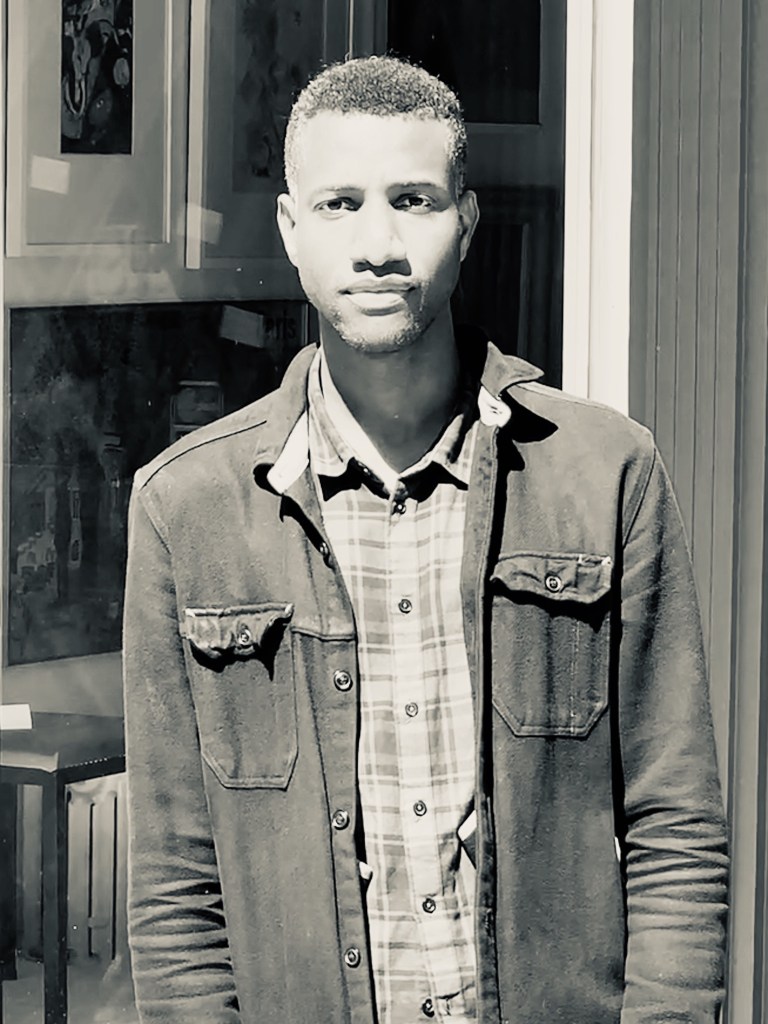
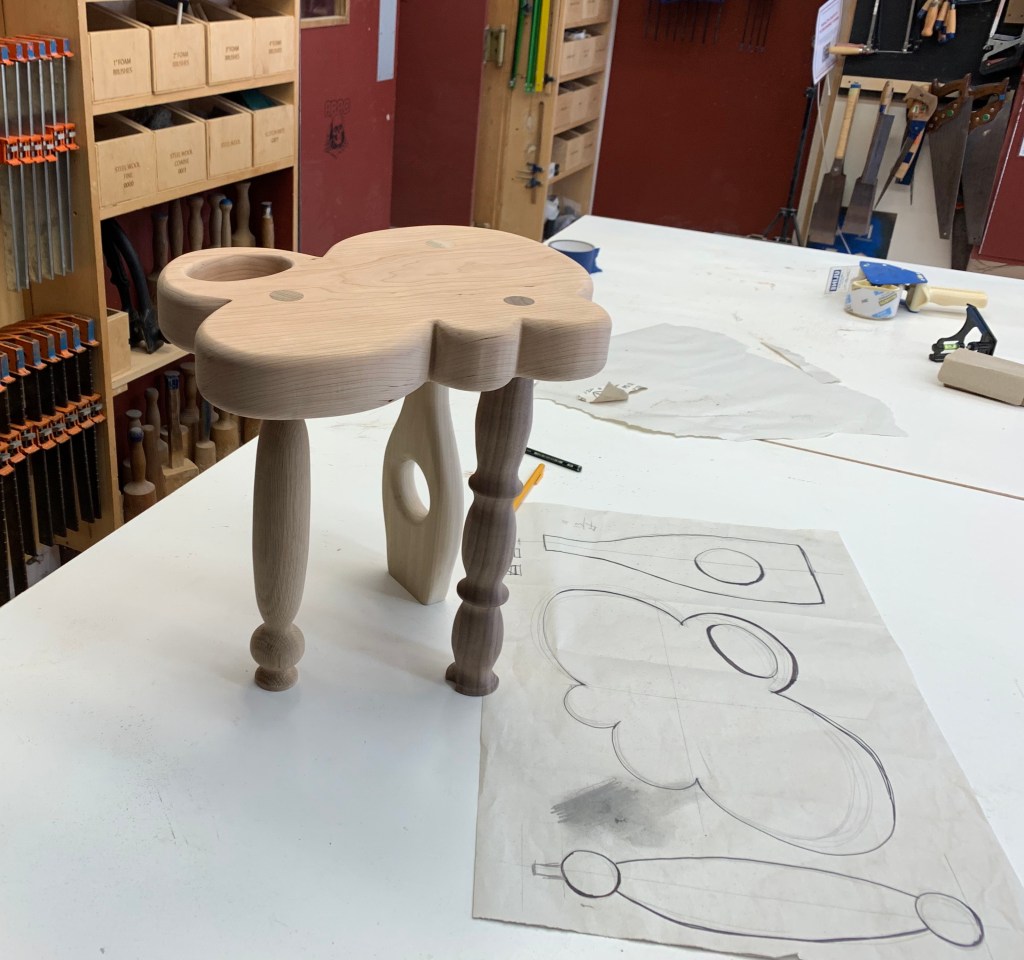




 Museum Career Internship Program